Untangling ARFID, Autism and Anorexia
Shannon Travers-Spencer on Neurodivergent-Affirming Eating Disorder Care with Shannon
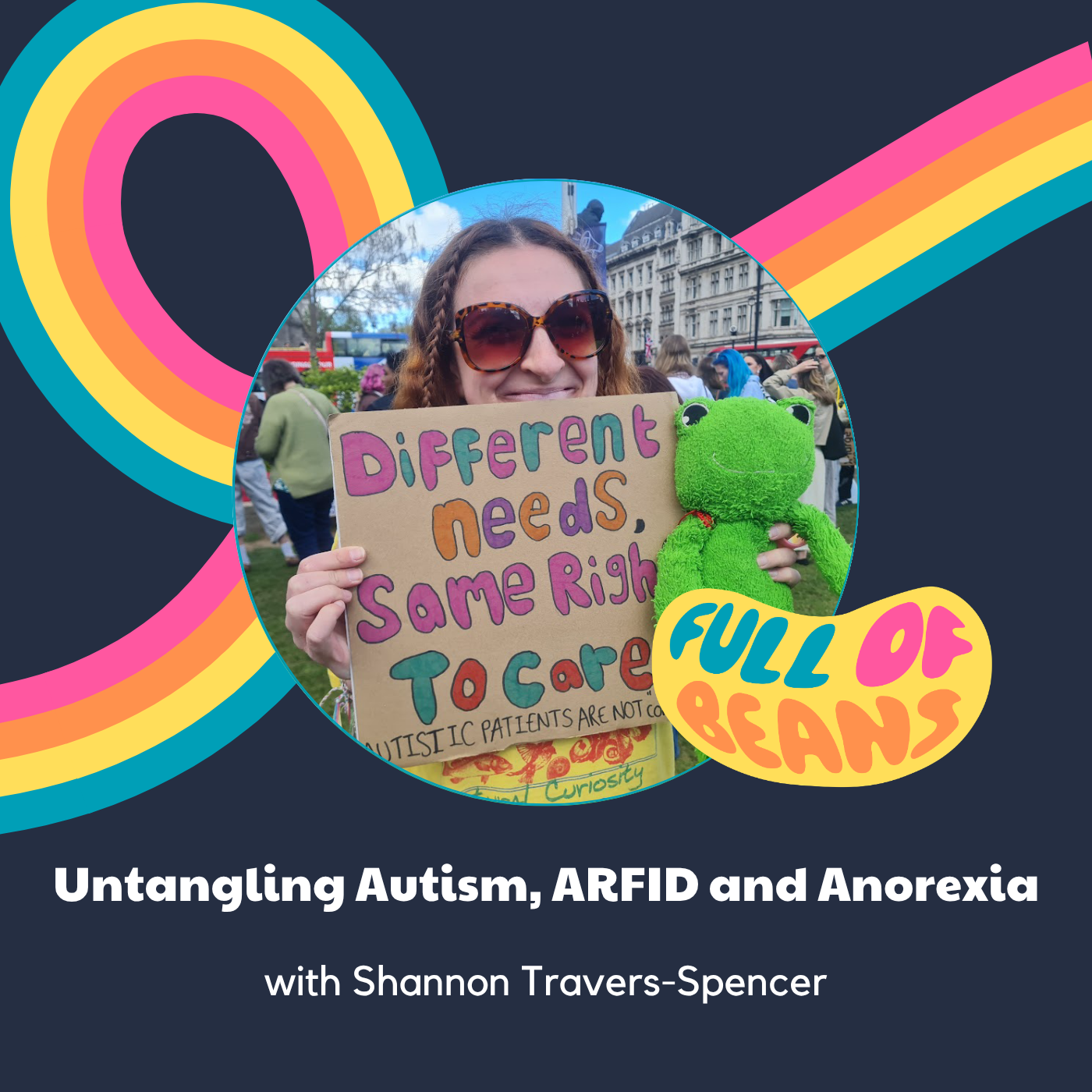
This week I'm joined by Shannon Travers-Spencer, who has lived experience of anorexia, autism, ADHD, ARFID and chronic illness, and shares their journey online. Shannon is a passionate advocate for inclusive care for neurodivergent individuals within eating disorder services, and spoke at this year's Dump The Scales march about navigating the UK's eating disorder system, and the barriers and accommodations they faced along the way.
When one condition hides inside another
Shannon first started struggling with what we'd now recognise as ARFID at just six years old, though it went largely unnoticed until anorexia developed more visibly as a teenager. It wasn't until a hospital admission in their early twenties, alongside a new autism diagnosis, that ARFID was ever named as a possibility. We talk about what it's like to live for years with something real and significant, without ever having the language to explain it, and how that absence of vocabulary can shape an entire eating disorder's course.
The four-box grid that changed everything
One of the most striking parts of this conversation is how Shannon, together with a dietitian, worked out exactly what was driving their eating: hours spent building a grid of "autism-safe" foods, "anorexia-safe" foods, and their unsafe counterparts. What they discovered was that many of Shannon's autism-safe foods were, at the same time, anorexia-unsafe, a genuinely illuminating way of separating two conditions that can look identical from the outside but come from entirely different places.
Why adapting care isn't as simple as it sounds
Shannon is refreshingly honest about the tension clinicians face here. Eating disorders are, by nature, manipulative and opportunistic, and there's a real risk that sensory or autism-related adjustments could be used by the illness to avoid recovery altogether. But Shannon also pushes back on where that caution can tip into harm, including an experience of being told, in effect, that they "weren't autistic enough" for their needs to be taken seriously, and what that does to the trust between a patient and the people trying to help them.
The diagnosis that finally made things make sense
Shannon describes the moment a psychiatrist first raised the possibility of autism, partway through a hospital admission, as a moment where they could finally breathe. We talk about how that diagnosis reframed so much of Shannon's earlier life, including why an eating disorder may have felt like the one part of the world that came with a rulebook, at a time when nothing else did.
What actually helps, according to someone who's lived it
If there's one message Shannon wants healthcare professionals to take from this conversation, it's disarmingly simple: listen to your patient. We talk through the small, low-effort adjustments that made a genuine difference in Shannon's care, why the language a clinician uses (the difference between "you should" and "you could") can completely change how safe a conversation feels, and why joined-up care between eating disorder services and mental health teams matters far more than it currently happens.
Listen to the full conversation
This is a genuinely eye-opening conversation, both for anyone with their own experience of ARFID, autism or eating disorders, and for anyone working in a clinical setting who wants to understand what neurodivergent-affirming care can actually look like in practice.
🎧 Listen to the full episode with Shannon Travers-Spencer wherever you get your podcasts, or watch on YouTube.
⚠️ Content note: This episode discusses eating disorders, ARFID, autism, suicidality, and inpatient psychiatric treatment. Please take care while listening.
Recent Posts