Looking Fine, Feeling Possessed: The Realities of Binging and Purging with Lexie-Kirwan Jones
The hidden reality of bingeing and purging
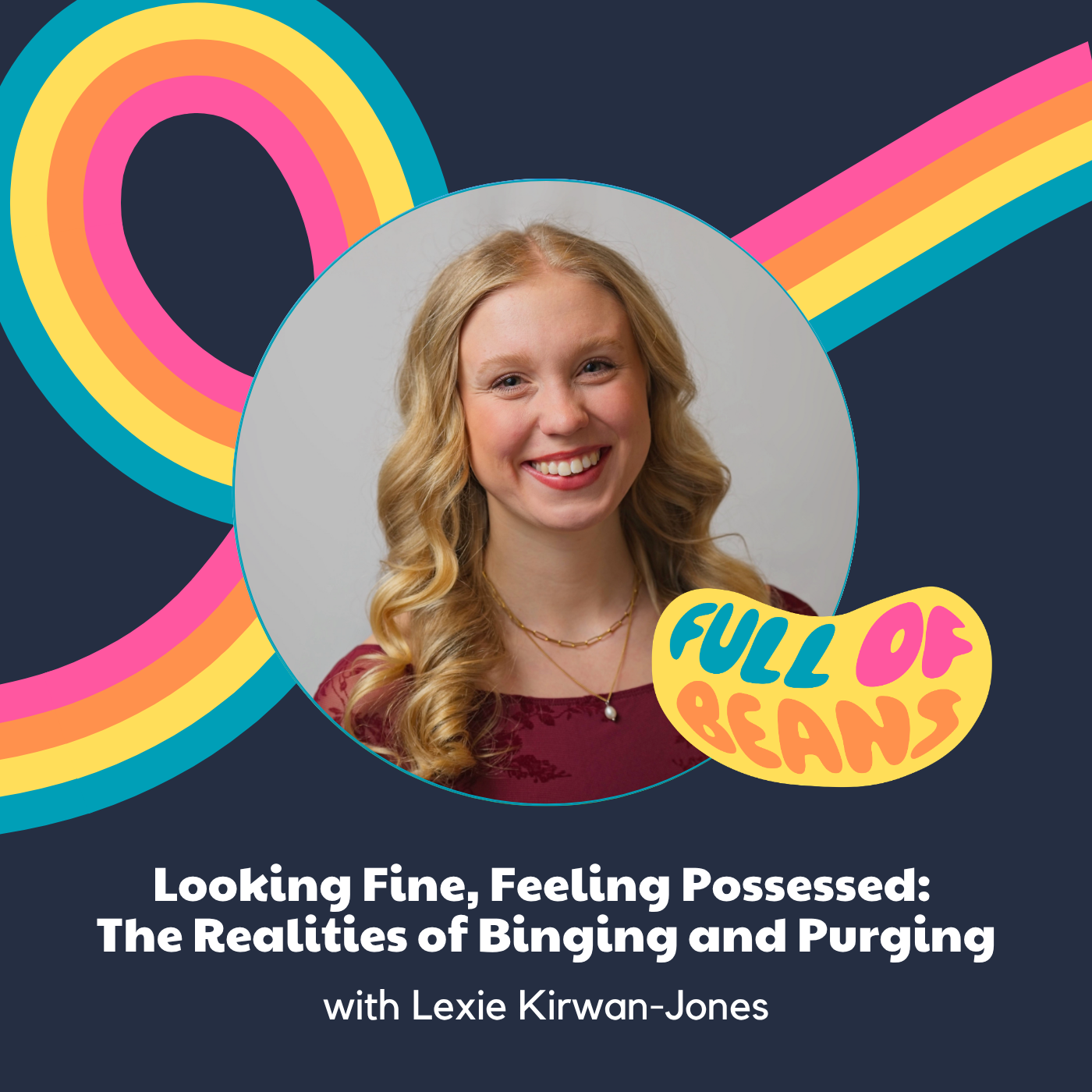
This week I'm joined by Lexie Kerwin-Jones, a psychology student at Durham University, an eating disorder peer support worker, and someone involved in research relating to eating disorders and neurodivergence. Lexie's path through university hasn't been a straight line.
After her eating disorder deeply impacted her time studying costume design, she took a year out to focus on her recovery, before returning to study psychology to become a clinical psychologist.
What she shares in this episode about living with anorexia binge-purge subtype is some of the most honest descriptions of the binge-purge cycle we've had on the podcast, and it's exactly the kind of conversation we don't have often enough.
Looking well is not the same as being well
One of the most powerful things Lexie challenges in this episode is the assumption that how someone looks tells you how unwell they are. During her most restrictive phases, Lexie describes feeling, in her own words, like things were "going well." It was only when she moved into more intense binge-purge cycles, cycles that kept her at a stable, healthy weight, that her mental health reached its lowest point. From the outside, she looked fine. Internally, it was anything but.
Why weight-focused check-ins can make things worse
Lexie is candid about an experience many people with bulimia or binge eating disorder will recognise: being weighed after opening up about a genuinely difficult week, and being told "you've gained weight, well done." For someone who has just disclosed daily binging and purging, hearing that their body weight is the measure of how "well" they're doing can feel like being unheard entirely. We talk about why this kind of feedback, however well-intentioned, can quietly reinforce the very thinking that keeps someone unwell.
What a binge actually feels like
This is a part of the conversation that's genuinely rare to hear described so precisely. Lexie talks about the sensation of losing control entirely, being unable to stop despite trying, and the disorientating mix of dissociation and total awareness that can happen during a binge. She's clear that this has nothing to do with willpower, and everything to do with a process that can feel, in her words, like being possessed.
The diagnosis that never quite fit
Lexie also discusses how her diagnosis shifted between anorexia and its binge-purge subtype depending on small, almost meaningless changes in body weight, despite her internal experience remaining essentially unchanged throughout. It's a striking example of how diagnostic categories can sometimes say very little about what someone is actually going through day to day.
University, independence and perfectionism
Much of Lexie's eating disorder intensified during university, where stress, identity and achievement became tightly bound together with disordered eating. We talk about how that cycle built on itself, and what eventually became the turning point that led Lexie to take a year out and begin the process of recovery in earnest.
Why this conversation matters
Bulimia and binge-purge behaviours are often left out of public conversations about eating disorders, or reduced to a single scene in a film that barely scratches the surface of what the experience actually involves. Lexie's account is a corrective to that, offered not to shock, but so that anyone who's lived through something similar knows they are not alone, and that what they experienced was real.
🎧 Listen to the full episode with Lexie Kerwin-Jones wherever you get your podcasts, or watch on YouTube.
⚠️ Content note: This episode discusses eating disorders, including binge eating, purging and bulimia, and disordered eating behaviours. Please take care while listening.
Connect with us:
- Subscribe to the Full of Beans Podcast
- Follow Full of Beans on Instagram
- Listen on YouTube
Recent Posts