From Anorexia to Binge Eating: The Common Shift Few People Talk About
Rebuilding Trust with Hunger and Fullness Cues with Emma Fairweather
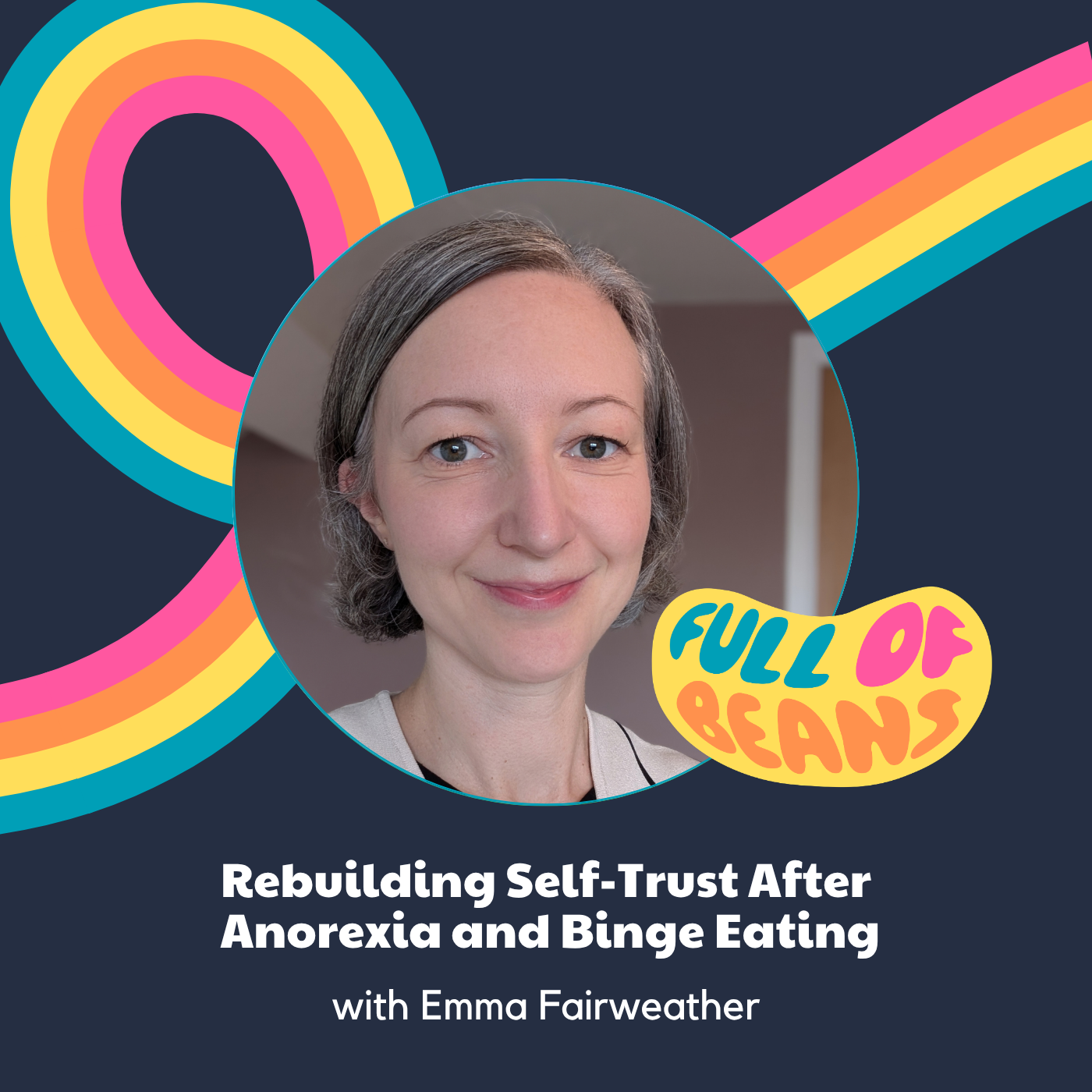
This week I’m joined by Emma Fairweather, a postdoctoral research scientist at the University of Liverpool, who also volunteers with Empowered, an NHS programme supporting lived-experience involvement in eating disorder services. Emma draws on her own experience of anorexia as a teenager, and binge eating disorder years later. She speaks openly and honestly about recovery, relapse, and what helped.
Eating disorders are often misunderstood as being only about food, weight or willpower. Conversations like this one show how much more complicated they are, and why recovery rarely follows a straight line.
Anorexia and Binge Eating Disorder: Two Diagnoses, One Disordered Relationship
Anorexia, bulimia and binge eating disorder are often talked about as separate conditions with very different presentations. Emma explains how anorexia and binge eating disorder, though they look completely different from the outside, can share the same root: a disordered relationship with food that doesn’t disappear just because eating looks “normal” again.
It’s a useful reminder that disordered eating exists on a spectrum, and that someone can look “recovered” on paper while still struggling with food, their body and their sense of control.
The Shame that Keeps Eating Disorders Going
Emma is candid about a triggering experience in treatment, and why she believes shame, more than fear, is often what keeps an eating disorder going long after it starts.
This matters for anyone with lived experience, and for the people supporting them. Shame can stop people asking for help, and it can make relapse feel like failure. Understanding that, whether you’re living with anorexia, bulimia, binge eating disorder or other disordered eating, can change how we talk about recovery.
Learning to Trust your Body Again
Emma shares what it actually took to rebuild trust in her own hunger and fullness cues, after years of letting her eating disorder make every decision for her.
Recovery isn’t only about changing what or how much you eat. For many people, it’s about learning to feel safe in their body again, and to believe the signals it’s sending.
Diet Culture, GLP-1s and the Pressure to “Fix” your Body
The conversation also turns to the wider culture shaping all of this. Diet culture tells us that bodies are problems to be solved, and that weight loss is always a goal worth chasing. Emma shares her own concerns about GLP-1 weight loss medications, and what she thinks they risk doing to people’s relationship with food and their bodies.
It’s a thoughtful, nuanced take from someone who has lived through eating disorders and now works in research, and it’s well worth hearing if you’ve felt the pull of diet culture yourself.
Listen to the Full Conversation
This is a genuinely honest conversation, both for anyone with their own experience of an eating disorder, and for anyone working in this space who wants to understand recovery as something ongoing, not a box to tick.
🎧 Listen to the full episode with Emma Fairweather on the Full of Beans podcast, or watch on YouTube.
⚠️ Content note: This episode discusses eating disorders, including anorexia, binge eating disorder, disordered eating behaviours and weight loss medication. Please take care while listening.
Thank you to
Nightingale Hospital for sponsoring the podcast.
Recent Posts