Redefining ARFID Recovery with ARFID Acceptance
"I live with ARFID... it's part of me, but it isn't the whole me."
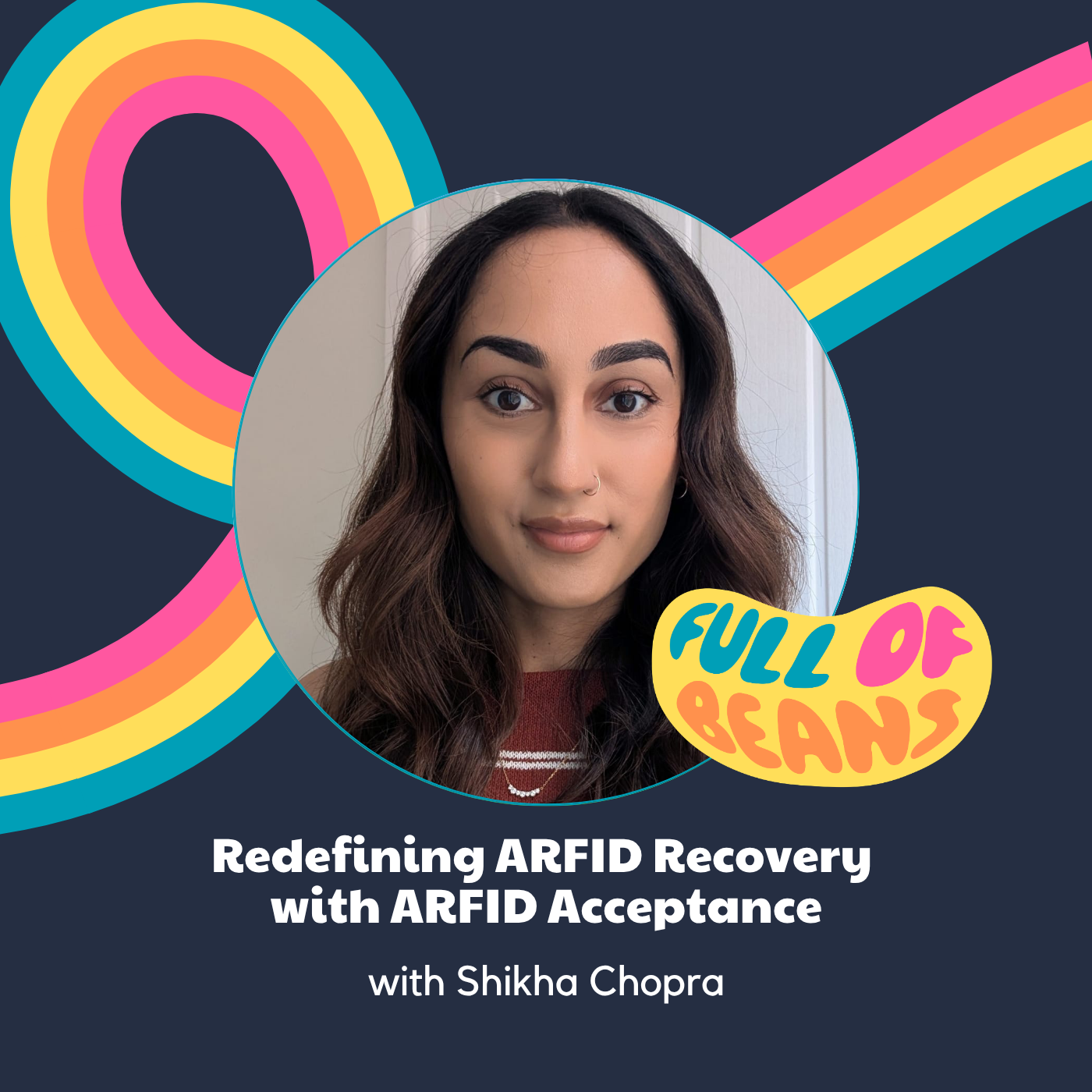
This week I'm joined by Shikha Chopra, a lived experience advocate living with ARFID (Avoidant/Restrictive Food Intake Disorder) and currently navigating pregnancy. Shikha is also autistic and a member of the ARFID Connect lived experience advisory group, led by Cardiff University. Her advocacy work stems from her own long struggle accessing ARFID support through the NHS, and from finding that the language of recovery so often used in the eating disorder space simply didn't fit her experience.
Living with something you can't yet name
For as long as Shikha can remember, she experienced anxiety around food and a fear of being sick as a result of what she'd eaten. But for years, this went unrecognised. Every time she tried to explain it to a GP, the conversation would drift towards generalised anxiety, and the specific, food-related part of what she was living with would get lost entirely. Without the right words, she couldn't be understood, and without being understood, she couldn't get help.
Then came a traumatic episode of sickness that changed everything. What followed wasn't instant clarity, but a slow, disorientating unravelling that eventually forced Shikha to confront just how much she was struggling.
The relief and the frustration
When Shikha eventually came across the term ARFID, something shifted. Finally having language for what she'd been experiencing her whole life meant she could start to advocate for herself in a way she never could before. We talk about what that moment actually felt like, and why simply having the right words to bring to a GP made such a difference, even before any formal treatment began.
But naming it turned out to be only the first hurdle. Even armed with the right terminology, Shikha ran straight into a system that, in her words, simply didn't treat ARFID in adults. We talk honestly about what it's like to finally find the name for your struggle, only to discover that help still isn't waiting on the other side of it.
When "recovery" doesn't fit
One of the most powerful parts of this conversation is Shikha's honesty about how the language of "recovery," so commonly used across eating disorder treatment, actually made things harder for her, not easier. If recovery means returning to a version of yourself before an illness, what does that mean when your ARFID is inseparable from being autistic? We talk through why "acceptance" became a far more meaningful goal for Shikha than recovery ever could, and why that reframe matters for anyone whose experience doesn't fit a one-size-fits-all treatment model.
What support actually looks like when it works
Not every part of Shikha's story is about systems falling short. We also talk about the GP who took the time to research ARFID herself, the peer support groups that gave Shikha a sense of not being alone, and the specialist support that finally helped her understand the connections between her ARFID, her autism, and the trauma she was carrying. It's a reminder of just how much of a difference genuinely being listened to can make.
Listen to the full conversation
This is a conversation about naming the unnameable, fighting for support that should exist but often doesn't, and finding a version of recovery that actually fits your life. If you've ever felt like your experience doesn't match what you're "supposed" to be going through, I think you'll find a lot in Shikha's story.
🎧 Listen to the full episode with Shikha Chopra wherever you get your podcasts, or watch on YouTube.
⚠️ Content note: This episode discusses ARFID, disordered eating, trauma, and pregnancy. Please take care while listening.
Connect with us:
- Subscribe to the Full of Beans Podcast
- Follow Full of Beans on Instagram
- Listen on YouTube
- Find out more about ARFID Connect here
- Check out Beat ARFID Page here
- Check out First Steps info on ARFID here
Recent Posts