Mindful Eating and Intuitive Eating: Can They Support ED Recovery?
How Mindful Eating Could Play a Role in Eating Disorder Recovery
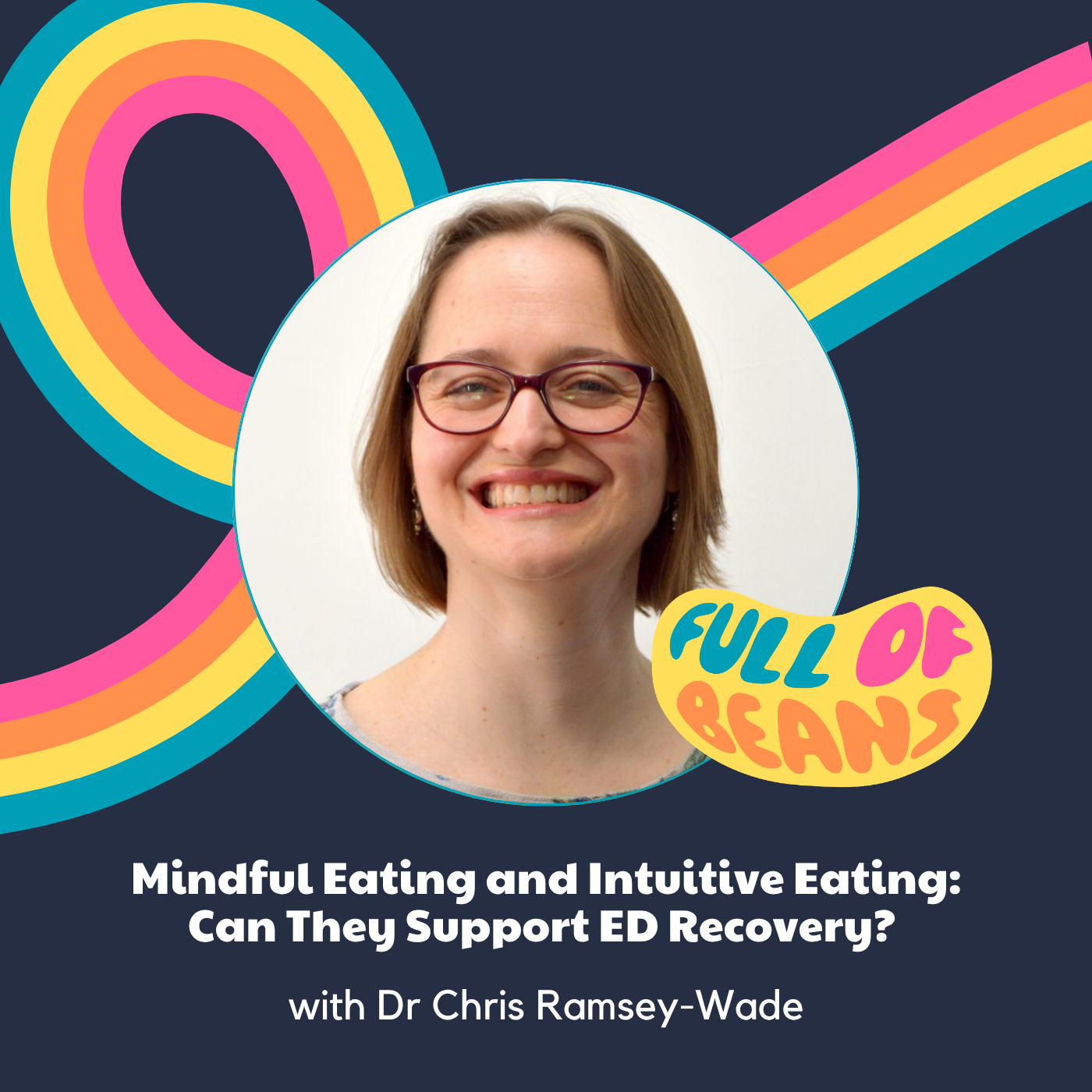
This week I’m joined by Dr Chris Ramsey-Wade, a researcher and counselling psychologist at the Centre for Appearance Research, where she is Interim Deputy Director. Chris has spent years working in eating disorder services, teaching mindfulness and researching mindful eating, and her PhD put a mindful eating programme to the test.
Mindful eating is often talked about as a quick fix or a wellness trend. This conversation is more honest than that, covering what it actually is, who it can help, and why timing matters in eating disorder recovery.
What Is Mindful Eating? Present-Moment Awareness Without Judgment
Chris explains mindfulness in plain terms, as paying attention to what’s happening right now with an attitude of acceptance rather than judgment. She also shares how a personal practice turned into a career spent bringing mindfulness into inpatient and university settings. It’s a useful starting point for anyone curious about mindfulness but unsure whether it’s “for them”, especially if the idea of slowing down and tuning inwards feels uncomfortable.
Mindful Eating vs Intuitive Eating: What’s the Difference?
The two are often confused. Chris breaks down how mindful eating and intuitive eating overlap, where they differ, and why she believes there is no place for “good” and “bad” food. She also has a thoughtful take on eating for emotional reasons, and on why a food-neutral, non-judgmental approach can make these ideas more accessible, including for neurodivergent people.
Why Fullness Cues Can Be So Hard in Eating Disorder Recovery
For many in recovery, understanding fullness cues can be one of the hardest parts of recovery. Chris shares practical ways she’s seen people reconnect with their hunger and fullness cues, including different ways of “asking the body” that work for different people.
Who Mindful Eating Can Help Most, and When It’s Too Soon
Chris is clear that mindful eating isn’t right for everyone at every stage. She explains why it may be most helpful for people experiencing binge eating, emotional eating or subclinical disordered eating, and why a different pace is needed for anyone in recovery from anorexia. She also talks about the gap many people fall into after discharge from services, and how building life skills could help prevent relapse. It’s an important reminder that recovery support has to meet people where they are.
Listen to the Full Conversation
This is a grounded, practical conversation for anyone with lived experience of an eating disorder, and for clinicians, researchers and carers who want to understand what mindful eating can and can’t offer.
🎧 Listen to the full episode with Dr Chris Ramsey-Wade on the Full of Beans podcast, or watch on YouTube.
⚠️ Content note: This episode discusses eating disorders, including anorexia and binge eating disorder, and includes a short guided mindfulness exercise focused on hunger and fullness, which may not feel right for everyone. Please take care while listening, and step out of the exercise whenever you need to.
Thank you to
Nightingale Hospital for sponsoring the podcast.
Recent Posts