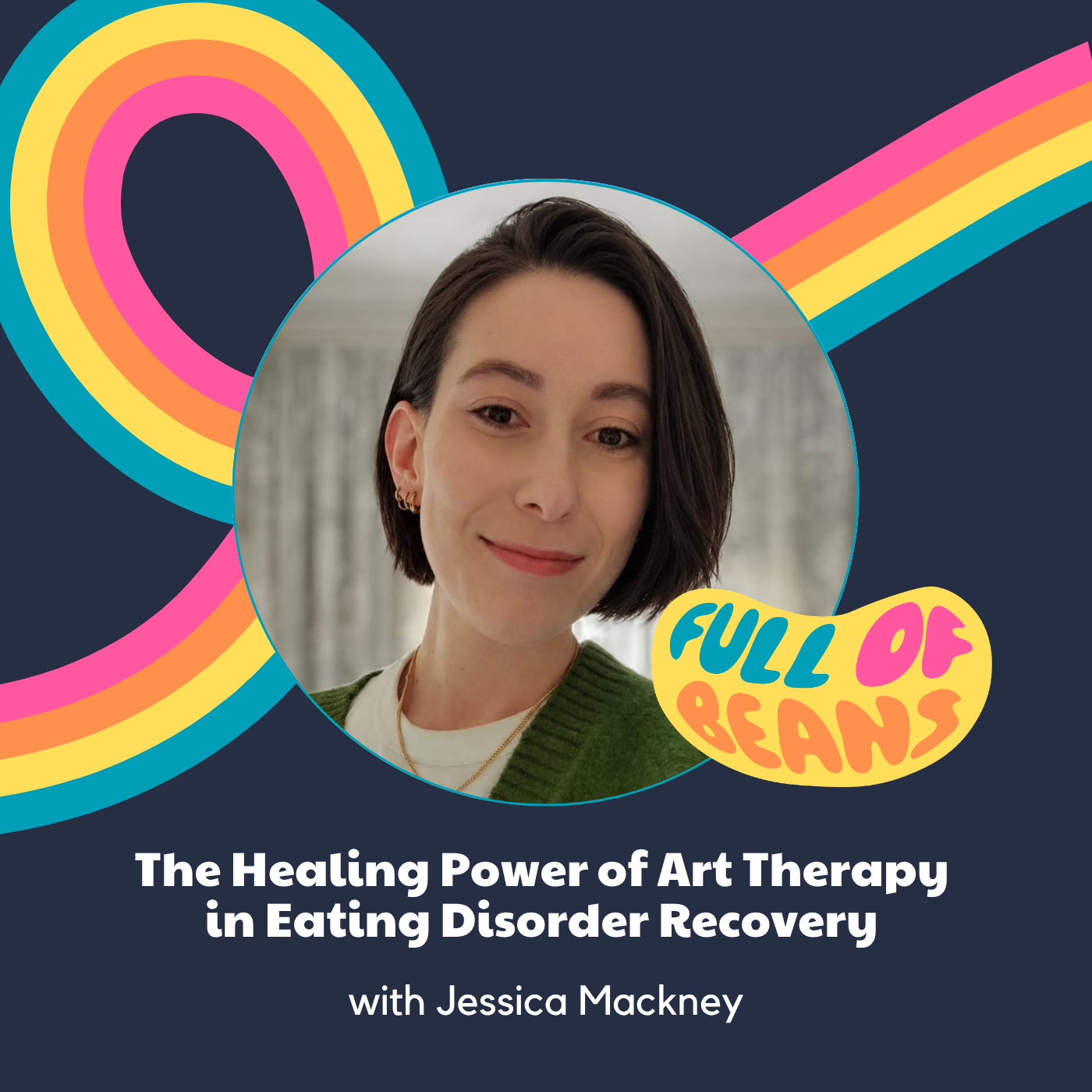
The Healing Power of Art Therapy in Eating Disorder Recovery
Jess Mackney on What Art Can Say When Talking Isn't Enough
If you've ever sat in a therapy room feeling like there simply aren't words for what you're carrying, this one is for you.
This week on the Full of Beans Podcast, I sat down with Jessica Mackney, an HCPC-registered Art Therapist working across eating disorder services for children, young people and adults in inpatient settings, to talk about what art therapy actually is, and how it can reach places that talking sometimes can't.
Jessica's interest in this work began during her final-year clinical placement in a community CAMHS eating-disorder service, a moment she describes as pivotal in shaping the rest of her career. She now works within a multidisciplinary team alongside psychologists, psychiatrists, dietitians and family therapists, and has gone on to present on art therapy and eating disorders at the University of Hertfordshire, speak at conferences on identity and embodiment, and coordinate a special interest group with the British Association of Art Therapists.
Beyond "Just Drawing or Painting"
One of the first things Jessica wanted to clear up was a misconception she comes across all the time, that art therapy is simply handing someone a crayon and asking what their scribbles mean. What's actually happening in the room is far more layered than that, and Jessica unpacks exactly what she's paying attention to when someone sits down with a material for the first time.
Perfectionism and the Fear of Getting It Wrong
We talked about why perfectionism and control show up so often for people with eating disorders, and why that can make even picking up a paintbrush feel unbearably exposing. Jessica shares how she works with that fear without ever forcing someone past it.
When Words Aren't Accessible
For people who are non-verbal, highly anxious, or too early in their journey to reflect on what they've been through, Jess explains how art can offer a way in that talking simply can't. We get into why that distance matters and how it changes what becomes possible in a session.
A Moment I Shared
I opened up about a difficult day of my own recently, sitting down to paint alongside my partner while wrestling with a wave of imposter syndrome. Let's just say it ended with a broken plaster cast, a canvas, and a window. What that moment taught me about where emotions actually go when they don't have words is something I'll let you hear for yourself.
Finding Your Way Back to Creativity
We also touched on what an eating disorder can quietly take from you creatively, sometimes long before you even notice it's gone, and what it can look like to find your way back to it.
If you've ever felt like there aren't words for what you're carrying, I hope this conversation shows you there might be another way in.
🎧 Listen to the full conversation with Jessica Mackney on the Full of Beans Podcast wherever you get your podcasts, or watch on YouTube.
Recent Posts