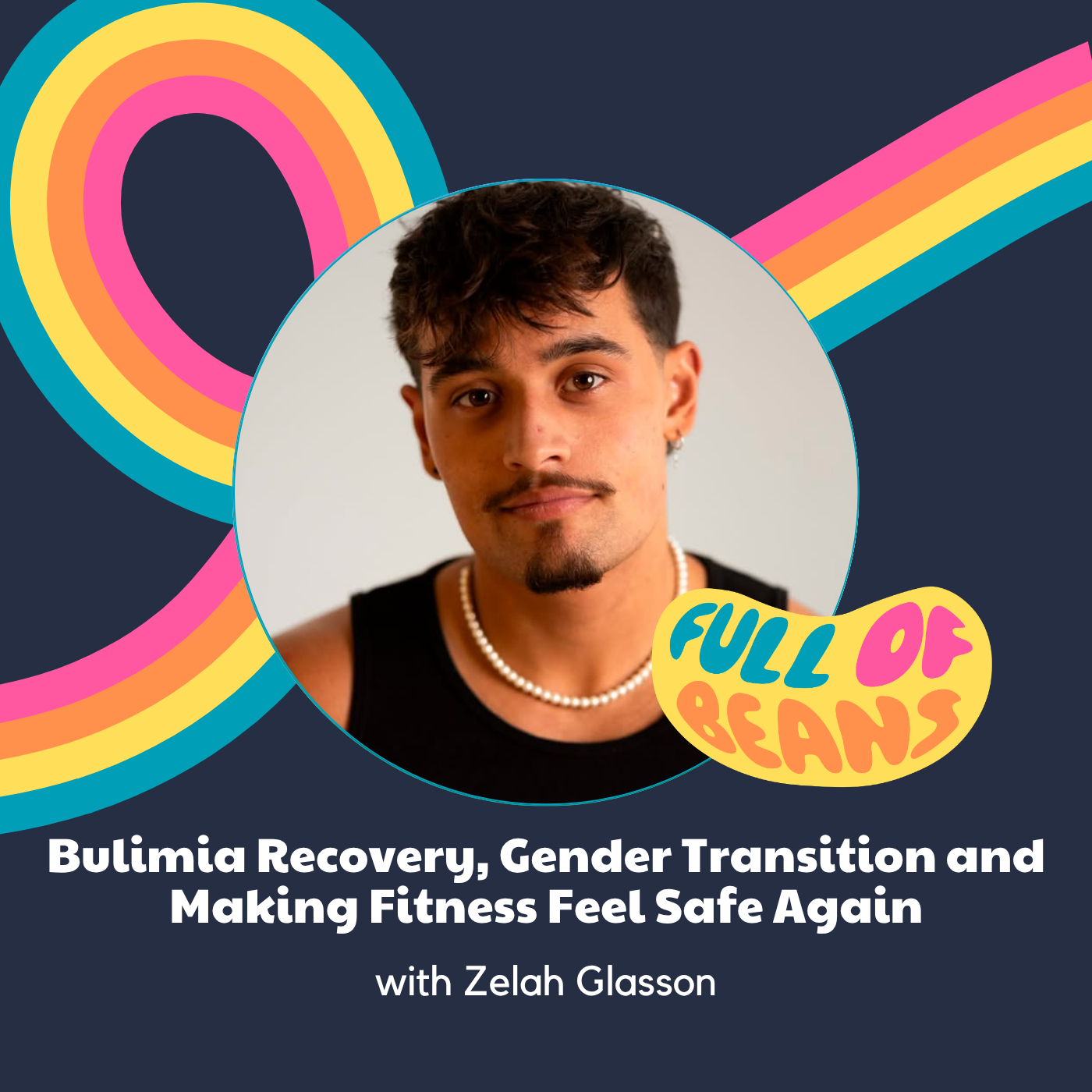
Bulimia Recovery, Gender Transition and Making Fitness Feel Safe Again
From Control to Connection through Recovery and Transitioning
If you've ever felt like your body was something to manage rather than something to live in, this one is for you.
This week on the Full of Beans Podcast, I sat down with Zelah Glasson, a personal trainer, content creator, and activist, who built a business specifically for trans and queer clients after years of not finding himself represented anywhere in fitness spaces. We talked about bulimia, control, gender dysphoria, and what it actually takes to rebuild trust in your own body.
A Diagnosis That Went Nowhere
Zela was diagnosed with bulimia in his teens, but it wasn't the first time he'd needed support and been let down by the timing of it. Years later, he finally reached out to an NHS therapist specifically for his bulimia, and what happened in that room within a matter of weeks says a lot about how eating disorder treatment can end up deciding who "qualifies" for help. I won't spoil the specific line that's stayed with him ever since, but it's one of those moments in the episode that's genuinely hard to sit with.
In Recovery, Not Recovered
We talked about the difference between being in recovery and being recovered, and why Zela deliberately holds onto the word "recovery" rather than claiming he's done with it entirely. It's a distinction I resonate with myself hugely, and one I think a lot of you will too.
What Bulimia Was Actually About
Zela was really honest about the fact that his bulimia was never really about food. He talks about a need for control that shows up in other parts of his life too, and the specific kinds of situations that made things flare up or ease off over the years. What struck me most was how he described the behaviour itself, and I'll let you hear that part directly from him.
Untangling Two Things That Were Always Tangled
One of the most powerful parts of this conversation is Zela unpacking, in hindsight, how much of what he experienced as body dysmorphia was actually gender dysphoria he didn't have the language for yet. He talks about a specific physical fixation that makes so much more sense to him now, a documentary that cracked something open for him at the time, and the moment that changed how he could picture his own future. I don't want to give away the details, but it's one of the most moving parts of the episode.
Exercise as a Lifeline and a Warning Sign
Fitness comes up throughout this conversation, but not in a straightforward "exercise saved me" way. Zela is honest about using exercise as a real coping tool through some genuinely difficult periods, and just as honest about the moments it tipped into something else entirely. We talk about how he tells the difference now and who helps him when he can't see it himself.
Building the Space He Never Had
All of this eventually led Zela to build a personal training business centred on trans and queer clients, shaped by everything the fitness industry got wrong for him as he was growing up. We talk about what that actually looks like in practice, and why it matters so much.
If you've ever felt like you needed to shrink, control, or manage your way into feeling safe in your own body, I hope this conversation shows you there's another way through.
🎧 Listen to the full conversation with Zelah Glasson on the Full of Beans Podcast, wherever you get your podcasts, or watch on YouTube.
Recent Posts