OSFED and UFED: The Most Common Eating Disorders You've Probably Never Heard Of
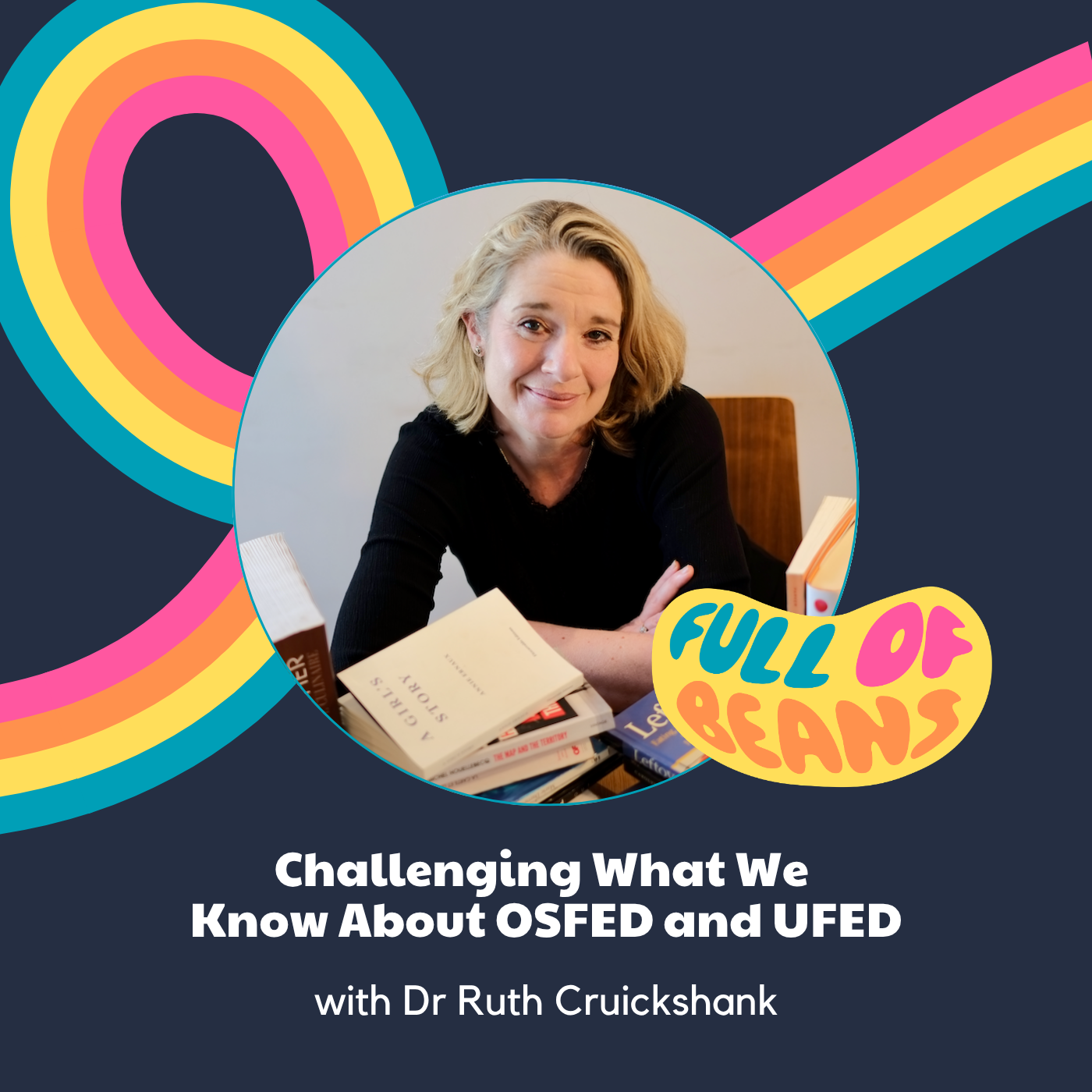
Challenging What We Know About OSFED and UFED
If you've ever sat with the feeling that something wasn't quite right with your relationship with food, but didn't feel like you fit the picture of what an eating disorder "looks like", this one is for you.
Because there are two eating disorder diagnoses that affect more people than anorexia and bulimia combined, and yet most people have never heard of them. They are OSFED (Other Specified Feeding or Eating Disorder) and UFED (Unspecified Feeding or Eating Disorder). And the fact that you might be reading this thinking, what are those, tells you everything you need to know about the problem.
What are OSFED and UFED?
OSFED was classified in 2013 and covers eating disorders that cause significant distress and impact on daily life, but don't meet the full diagnostic criteria for anorexia, bulimia or binge eating disorder. It includes atypical anorexia, subthreshold bulimia, subthreshold binge eating disorder, purging disorder and night eating disorder.
UFED is similar, but used when a clinician determines that an eating disorder is present without specifying which type.
Both are just as serious, just as debilitating, and just as deserving of care and treatment as any other eating disorder diagnosis. And yet they remain dramatically under-researched, under-recognised and under-supported.
Why Are OSFED and UFED So Overlooked?
This is something I explored in depth with Dr Ruth Cruickshank in this week's episode of the Full of Beans Podcast, and her answer was as fascinating as it was frustrating.
Part of it comes down to how eating disorders have historically been understood. For a long time, anorexia was the only named eating disorder. Bulimia wasn't even named until 1979. OSFED and UFED have only existed as diagnoses since 2013, which, in research terms, is still very new.
But it goes deeper than that. The diagnostic criteria for OSFED in the DSM-5, the major diagnostic manual used by clinicians, spans just two-thirds of a page, compared to nine pages for anorexia. It focuses on distress and impairment in daily life, which are critically important, but nobody has yet done the work to properly define what that means or how it feels across the full range of people living with it.
Because OSFED is so under-researched, it is also massively underdiagnosed. And because it is underdiagnosed, people don't qualify for studies. And because they don't qualify for studies, the research never gets done. It is a cycle that is incredibly difficult to break.
Add to that a healthcare system that has historically focused on weight and behaviour as markers of eating disorder severity, and you begin to understand why so many people with OSFED and UFED are told, in one way or another, that they are not sick enough.
The Impact of Not Having an Eating Disorder Diagnosis
As I know from my own experience, not having a name for what you are going through is incredibly isolating. When you cannot name something, it is harder to seek help, harder to connect with others who understand, and harder to believe that what you are experiencing is real and serious.
Ruth put it beautifully in our conversation. She described spending years only being able to explain her experience by saying that if she didn't spend so much of her time thinking about food, she might have more space to be herself. That is the reality of living with an eating disorder that nobody has given you the language to describe.
OSFED, UFED and the Gap in Eating Disorder Treatment and Support
Right now, NICE, the body that produces clinical guidelines in the UK, doesn't have specific treatment guidelines for OSFED. That means that when someone receives this diagnosis, the pathway forward is far less clear than it would be for someone diagnosed with anorexia or bulimia.
This does not mean that eating disorder support isn't out there. It does mean that people with OSFED and UFED often have to fight harder to access it, and may find themselves placed in eating disorder treatment pathways that don't fully reflect their experience.
That needs to change. And researchers like Ruth are challening why OSFED remains so systemically overlooked, are working hard to make sure it does.
Getting Support for OSFED and UFED
If you've ever felt dismissed, othered, or like your eating disorder experience just didn't quite count, please know that it does. Your distress is real. Your experience is valid. And you deserve support, whatever your diagnosis.
🎧 Listen to my full conversation with Dr Ruth Cruickshank on the Full of Beans Podcast wherever you get your podcasts, or catch it on YouTube.
Recent Posts