Holding Two Truths: When Eating Disorder Care Both Helps and Harms
When we focus on weight in eating disorder treatment, are we doing more harm than good?
If you have ever left a treatment appointment feeling more misunderstood than when you walked in, or felt like the system designed to help you was somehow making things harder, this one is for you.
Because one of the most important and least comfortable conversations we can have about eating disorder recovery isn't about what we eat, or what we weigh, or which therapy model works best. It's about what happens when the care system itself becomes part of the problem, even when everyone inside it is trying their hardest to help.
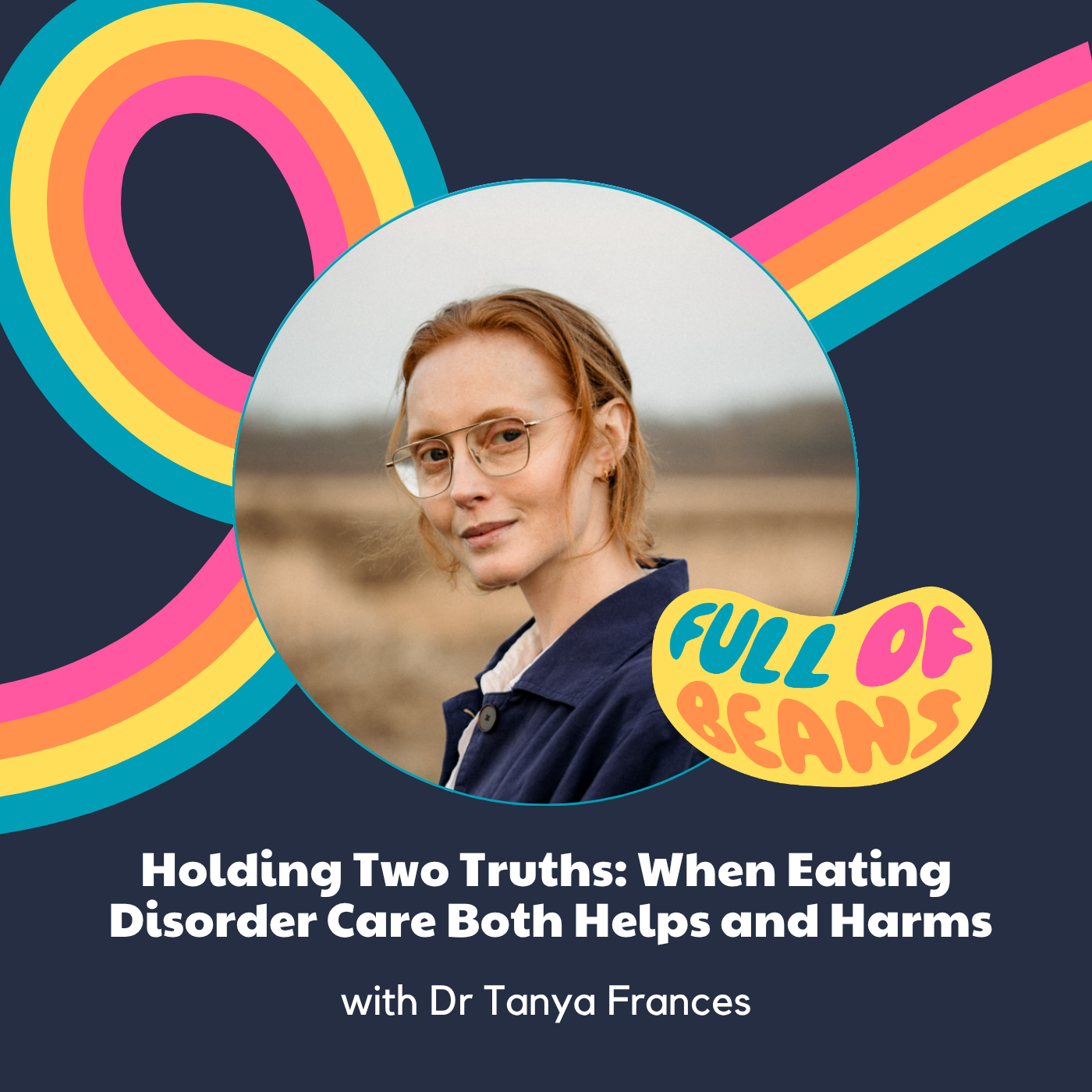
This week on the Full of Beans Podcast, I sat down with Dr Tanya Frances, research psychologist, lecturer, psychotherapist, and someone with her own lived experience of an eating disorder, for a conversation that I think will stay with me for a long time.
What Is Iatrogenic Harm, And Why Does It Matter?
Iatrogenic harm is a term that describes when someone is harmed through the process of seeking care. It is most commonly discussed in medical contexts, but Tanya's research brings it right into the heart of eating disorder treatment, and the implications are significant.
This is not about individual clinicians doing bad things. Tanya is clear on that, and so am I. Most people working in eating disorder services are there because they genuinely want to help. They bring compassion, care, and a real desire to make a difference. But good intentions alone cannot override a system that is built on some deeply problematic assumptions, and that is where the harm can creep in.
The Problem With Putting Weight at the Centre
One of the things Tanya has been researching is the role of BMI and weight in eating disorder treatment, and what she has found is troubling. Weight stigma is deeply embedded in healthcare, not just in society, but in the very systems people turn to when they are struggling. And for people with eating disorders, that can mean being shut out before they have even begun.
When weight becomes the central measure of whether someone is ill enough to deserve treatment, or whether they are recovering well enough to be discharged, something very counter-therapeutic happens. Treatment starts to use the same logic as the eating disorder itself, reinforcing the idea that the number is what matters most, when we know that eating disorders are so much more complicated than that.
I know from my own experience that reaching a target weight did not mean I was recovered. The thoughts were still there. The fear was still there. But the support wasn't, because the number said otherwise.
The Culture of Mistrust
Something Tanya raises that really stayed with me is the historical culture of mistrust around eating disorders, this longstanding assumption that people with eating disorders cannot be believed, that their behaviours make them inherently unreliable, that they need to be controlled rather than heard.
And what that mistrust does, in practice, is push clinicians towards more objective measures, weight, BMI, medical markers, because those feel safer than trusting what a patient says. Tanya shared her own experience of being in inpatient care, thirsty, asking for a drink, and being told that was her eating disorder talking. Not a person with a body that needed water. A diagnosis to be managed.
That moment captures something important. When we stop listening to the person and only hear the illness, we do real damage, to their trust, to their sense of self, and to their ability to recover.
People Pleasing in Treatment
This is something I have spoken about a lot on the podcast, and Tanya's research gives it even more weight. When someone people pleases their way through treatment, eating the meals, gaining the weight, saying the right things, it can look exactly like recovery from the outside. But if it is driven by fear of rejection rather than a genuine desire to get better, nothing has really changed. And when they go home, there is nothing new to reach for.
Tanya describes this as compliance being mistaken for progress. And the tragic thing is that the system often rewards it, without ever stopping to ask what is actually driving it.
When Clinicians Can't Act on Their Own Values
One of the most striking things to come out of Tanya's focus groups with clinicians was the concept of moral injury, the distress that comes from being asked to act against your own values within a system that leaves little room for anything else. There are clinicians out there doing incredible work, holding compassion and curiosity in a system that doesn't always make that easy. And that tension is real.
Tanya's point is that the problem is rarely the individual. It is the culture, longstanding assumptions about how eating disorders should be treated, built up over decades, that are genuinely difficult to shift.
Two Things Can Be True at Once
What I kept coming back to throughout this conversation is something I have been thinking about a lot lately, that two truths can exist at the same time. The system can be broken and full of incredible people trying their best. Treatment can cause harm and also save lives. Care can feel dehumanising and also be the thing that starts to turn things around.
Holding both of those things is hard. But I think it might be where some of the most important conversations in eating disorder care begin.
Because if we can acknowledge that something isn't working without blaming the people inside it, and if we can talk honestly about what needs to change without losing sight of what is already good, then maybe we start to move somewhere different. Somewhere more human. Somewhere that actually listens.
Please note that eating disorder recovery is deeply individual and looks different for everyone. If anything in this blog resonates with you, please do explore it as part of your own journey and alongside your treatment team or support network.
🎧 Listen to the full conversation with Tanya Francis on the Full of Beans Podcast wherever you get your podcasts, or watch on YouTube.
Recent Posts