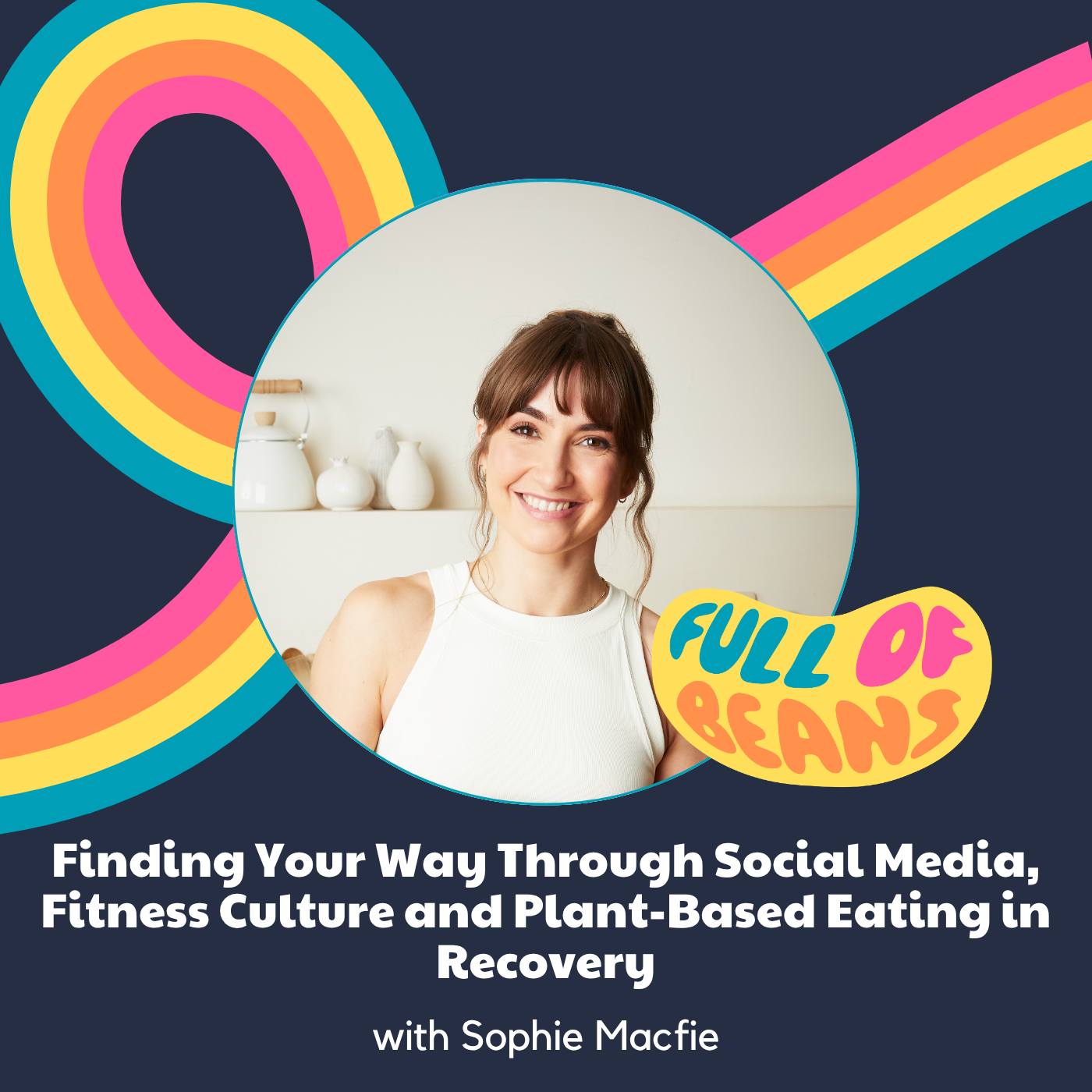
Finding Your Way Through Social Media, Fitness Culture and Plant-Based Eating in Recovery
Can Fitness and Plant-Based Eating Be Part Of Eating Disorder Recovery?
If you've spent any time in the world of plant-based eating or fitness on social media, you'll know it can be a minefield. What should feel like spaces full of joy, nourishment and movement has, for so long, been tangled up with diet culture, impossible body ideals and a kind of relentless pursuit of perfection that has very little to do with actually feeling good.
And if you're in eating disorder recovery, navigating all of that can feel exhausting.
When wellness isn't so well
The plant-based world, as beautiful as it is at its core, has not been immune to toxic diet culture.
For years, certain corners of it have been dominated by extremely restrictive approaches dressed up as health and wellness, low-calorie, low everything, wrapped in the language of clean living. And for someone in recovery, that can be incredibly difficult to untangle.
The fitness industry has its own version of this, too. Walk into many gyms, and you'll still find imagery that glorifies one very specific body type as the ideal. Content that conflates fitness with aesthetics, shrinking with strength, restriction with discipline. It's dated, it's damaging, and for so many people, it has made moving their bodies feel like punishment rather than joy.
Soph's Plant Kitchen
Which is exactly why I loved sitting down with Sophie from Soph's Plant Kitchen for this week's episode of the Full of Beans Podcast.
Sophie is a plant-based recipe developer, cookbook author and personal trainer who has her own lived experience of disordered eating. And what she brings to both spaces is something that feels genuinely rare, a voice that is warm, honest, and completely grounded in the idea that food and movement should add to your life, not take from it.
She talks about plant-based eating not as a restriction, but as an abundance. As a way of living in alignment with your values. She doesn't count calories, she doesn't push a certain body type, and she is refreshingly honest about the parts of the fitness and wellness world she finds challenging too.
A nuanced conversation
We get into so much in this conversation: the social media algorithm and why it can feel like it's working against you in recovery, the "strong not skinny" movement and the nuance around it, and why defining yourself by just one thing, however healthy it looks on the surface, can sometimes keep you stuck.
But more than anything, this episode is a reminder that plant-based eating and fitness can be part of a joyful, nourishing life, when they come from the right place, and when they're part of a bigger picture that is uniquely yours.
A gentle reminder
Recovery is deeply individual. What feels right for Sophie, or for me, may not be where you are right now, and that is completely okay. Please always explore anything new as part of your own personalised recovery journey and in conversation with your treatment team. We are all at different stages, and every single one of them is valid. 💛
🎧 Listen to the full episode on the Full of Beans Podcast wherever you get your podcasts.
Find Sophie:
🌐 https://app.sophsplantkitchen
📱Instagram, YouTube, TikTok & Facebook: @sophsplantkitchen
📖 30 and 30: available now wherever you get your books
Recent Posts