Could Low-Dose Oral Ketamine Support People with Anorexia and Depression? with Professor Huberus Himmerich
Exploring ketamine as a treatment for people with anorexia and major depressive disorder: the EDEN study
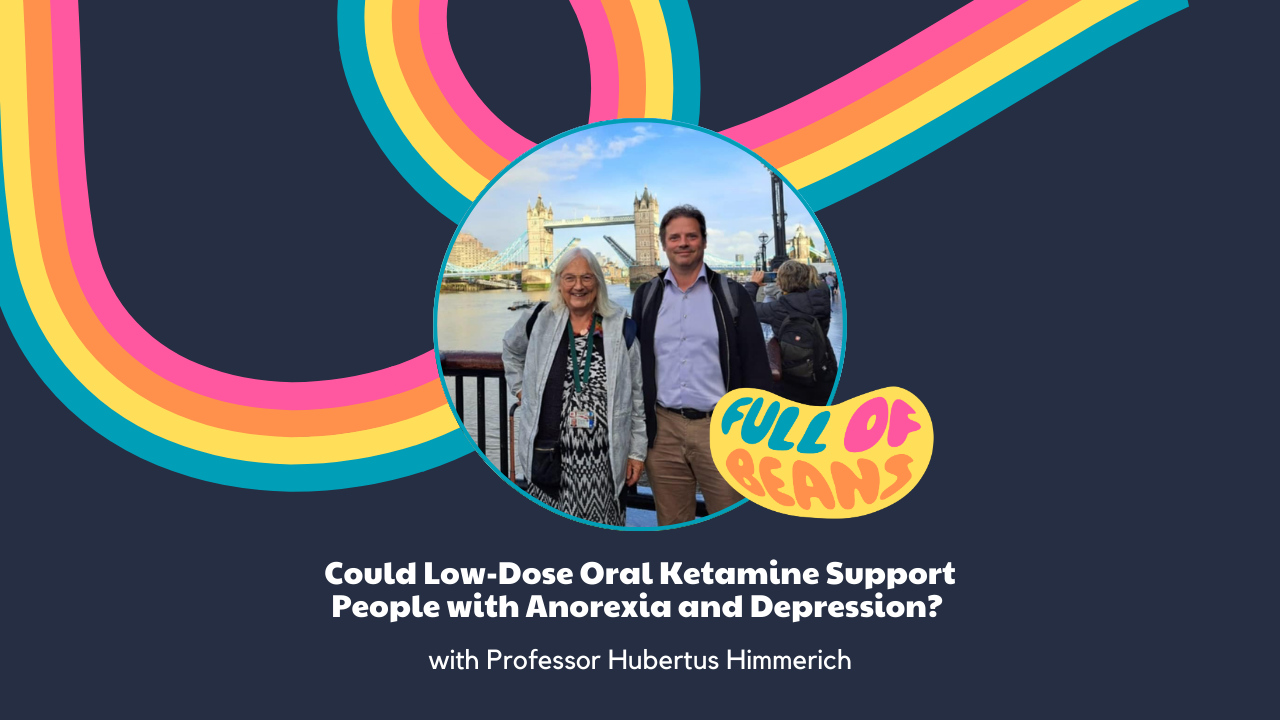
In this episode of the Full of Beans Podcast, Hannah is joined by Dr Hubertus Himmerich, Consultant Psychiatrist, Reader in Eating Disorders at King’s College London, and the principal investigator of the EDEN study.
The EDEN study is exploring whether low-dose oral ketamine, a previously approved treatment for treatment-resistant depression, could support people living with both anorexia nervosa and depression, particularly when their eating disorder has been present for several years and recovery has been difficult.
Depression affects around 50% of people with anorexia nervosa, and it is known to make recovery more challenging. Low mood, hopelessness, and anxiety can make it incredibly hard to engage in treatment or feel motivated to work towards recovery. At the same time, many commonly prescribed antidepressants are often not effective for depressive symptoms in people with anorexia.
This is where the EDEN study comes in.
In this conversation, Hannah and Hubertus explore the science behind ketamine, how it works differently from traditional antidepressants, and why researchers are investigating whether it could provide a new treatment option for people with anorexia and depression.
In this episode, we discuss:
- Why depression is so common in anorexia nervosa
- Why traditional antidepressants often don’t work well in this population
- The science behind ketamine and how it affects brain plasticity
- Why the EDEN study focuses on improving mood rather than weight
- How depression can reduce hope and motivation in recovery
- The difference between medical ketamine treatment and recreational ketamine use
- How the study has been shaped by people with lived experience
- Why new treatment approaches are needed in the eating disorder field
About the EDEN Study
The EDEN study (A Randomised-controlled Feasibility Study of Ketamine for the Treatment of Depression with Anorexia Nervosa) is the first study investigating whether oral ketamine, compared with placebo, is feasible for people with both anorexia nervosa and major depressive disorder.
Ketamine has already been shown to have rapid antidepressant effects in other populations, and researchers are now exploring whether it could help relieve depressive symptoms in people with anorexia.
The hope is that improving mood may help people feel more able to engage with psychotherapy and recovery.
The study is a feasibility trial, meaning researchers are assessing whether a larger trial would be possible and acceptable. Participants receive either ketamine or a placebo twice per week for four weeks, with monitoring and follow-up assessments over several months.
Interested in Taking Part?
Participants may be eligible if they:
- Are 18 or over
- Have had anorexia nervosa for at least three years
- Are experiencing depression that has not responded to treatment
- Have a BMI over 14 and weigh over 40kg
- Are able to attend study visits in London
Participants can receive up to £190 for taking part, with travel expenses covered.
If you’d like to find out more, you can contact the research team directly at eden@kcl.ac.uk
About the Guest
Dr Hubertus Himmerich is a Consultant Psychiatrist and Reader in Eating Disorders at King’s College London. His research focuses on the biological and psychiatric mechanisms underlying eating disorders and developing new treatment approaches.
Content Warning
This episode includes discussion of eating disorders, depression and mental health treatment.
If you need support, please find support on the BEAT website.
Connect with Us:
- Subscribe to the Full of Beans Podcast
- Follow Full of Beans on Instagram
- Listen on YouTube
Recent Posts