Eating Disorder, Compulsive Exercise & Late Neurodivergence Diagnosis
When Recovery Gets Complicated:
Exercise, Neurodivergence, and Why the Lines Aren't Always Clear
There's a version of recovery that looks really clean from the outside.
You stop the behaviours. You get support. You get better. Simple.
I used to believe that version. I used to think that if I could just get to the other side of the eating disorder, everything would fall into place. That recovery was a destination I could reach if I just tried hard enough, wanted it badly enough, pushed through enough.
What nobody told me was that for some of us, it's so much more complicated than that.
Exercise As My Only Coping Mechanism
When my relationship with food started to shift, exercise filled the gap. And on the surface, that looked like progress. I was doing something "healthy." I had structure. I had goals. People told me I looked great, that I was an inspiration, that they wished they had my discipline.
And for the first time in a long time, maybe ever, I felt like I fitted in somewhere.
The gym gave me an identity. It gave me a community. It gave me a reason to get up in the morning and a way to get through the day. When everything else felt chaotic, overwhelming, and too much, exercise was the one thing I could control. The one place where I knew exactly what was expected of me, and I could meet that expectation every single time.
What I couldn't see from the inside, what took me years to understand, was that I hadn't recovered at all. I had just found a new way to do the same thing.
The behaviours looked different. But the function was identical. Exercise had become the way I managed emotions I didn't know how to feel, regulated a nervous system I didn't know was struggling, and numbed out a pain I didn't yet have the words for.
And I genuinely didn't know. That's the part that still gets me when I look back. I wasn't hiding it. I wasn't lying to myself. I truly believed I was better.
The Missing Puzzle Piece
Getting my ADHD and autism diagnoses changed everything. Not overnight, and not without its own grief and confusion, but it reframed so much of my story in a way that nothing else had managed to do.
Suddenly, I understood why routine felt so essential. Why numbers were so compelling. Why the structure of training, the sameness of it, the predictability of it, felt so calming in a world that often felt completely overwhelming. My nervous system hadn't been broken or dramatic or too much. It had been trying to cope the only way it knew how.
But here's where it gets complicated. Because when routine genuinely helps you regulate, when structure is something your nervous system actually needs, how do you know when it tips over into something disordered? How do you tell the difference between a coping strategy that's helping you and one that's keeping you stuck?
For a long time I used my neurodivergence as an explanation for everything. Of course I need this routine. Of course I need this structure. I'm autistic. This is just how I am.
And some of that was true. But some of it was my eating disorder borrowing language it had no right to use.
Untangling the two has been one of the hardest and most important things I have ever done. And I won't pretend I've got it fully figured out. There are still days where I genuinely don't know which part of me is speaking. But I've learned to ask better questions. Does this feel like freedom or does it feel like a rule I'm not allowed to break? Am I doing this because it genuinely helps me, or because I'm terrified of what happens if I don't? If someone took this away from me tomorrow, would I be okay, or would everything fall apart?
Those questions don't always have comfortable answers. But they're the ones that have moved me further than anything else.
What Recovery Can Look Like
Recovery being messy doesn't mean you're doing it wrong. It doesn't mean you're failing. It doesn't mean you're too complicated or too far gone or that things will never feel different.
Sometimes it just means you're carrying more than one thing at once. And those things deserve to be understood separately, with real care and real curiosity, before you can start to work through them together.
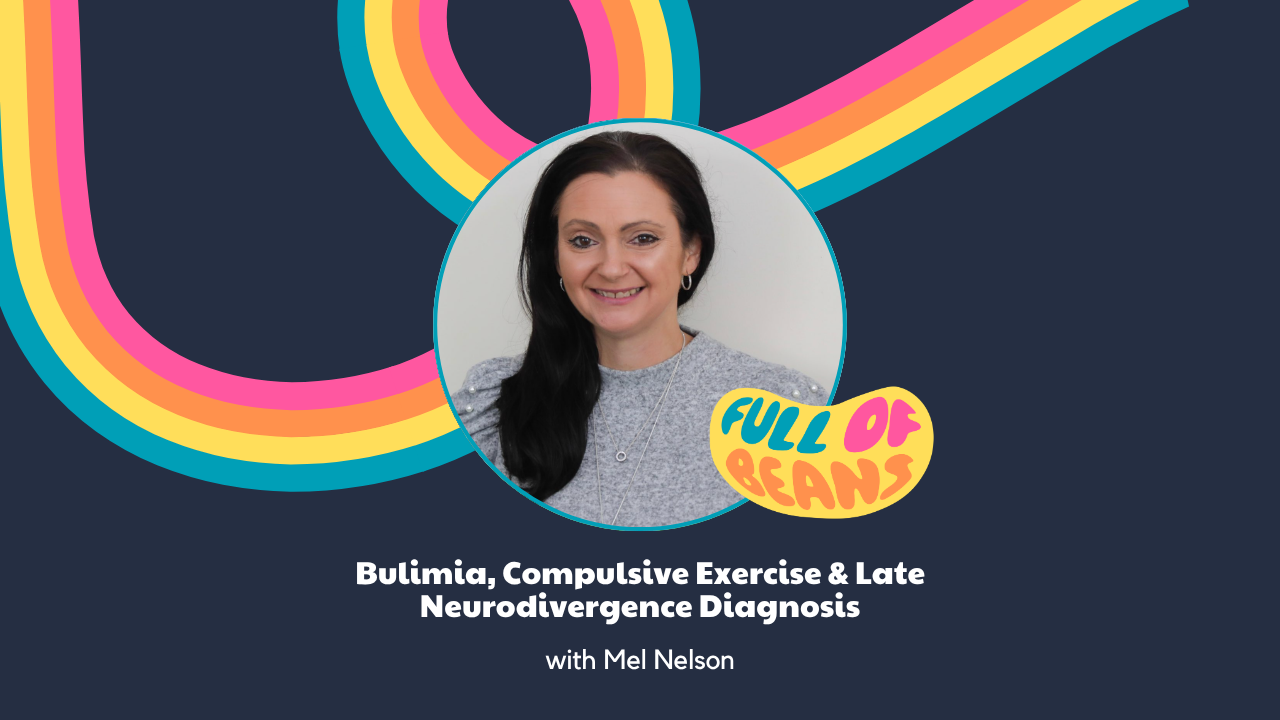
If any of this resonates, I'd really encourage you to listen to my recent conversation with Mel Nelson on the Full of Beans podcast. Mel is a qualified counsellor with her own lived experience of bulimia, compulsive exercise, and a late neurodivergence diagnosis, and the conversation felt like finally being understood in a way I didn't even know I was looking for.
You can watch the podcast on YouTube or listen on your favourite podcast platform.
If you want more from Mel, you can find her at newdaycounselling.co.uk or on Instagram at @newdaycounselling.
You deserve support that holds all of this. All of you.
Recent Posts