Are Eating Disorders a Form of Addiction?
It might be controversial, but we're going there!
One of the questions I find myself coming back to time and time again, both personally and through conversations on this podcast, is this:
Are eating disorders a form of addiction?
It’s not a straightforward yes or no. But the more I’ve spoken to clinicians, researchers, and people with lived experience… the more I’ve realised just how much overlap there is.
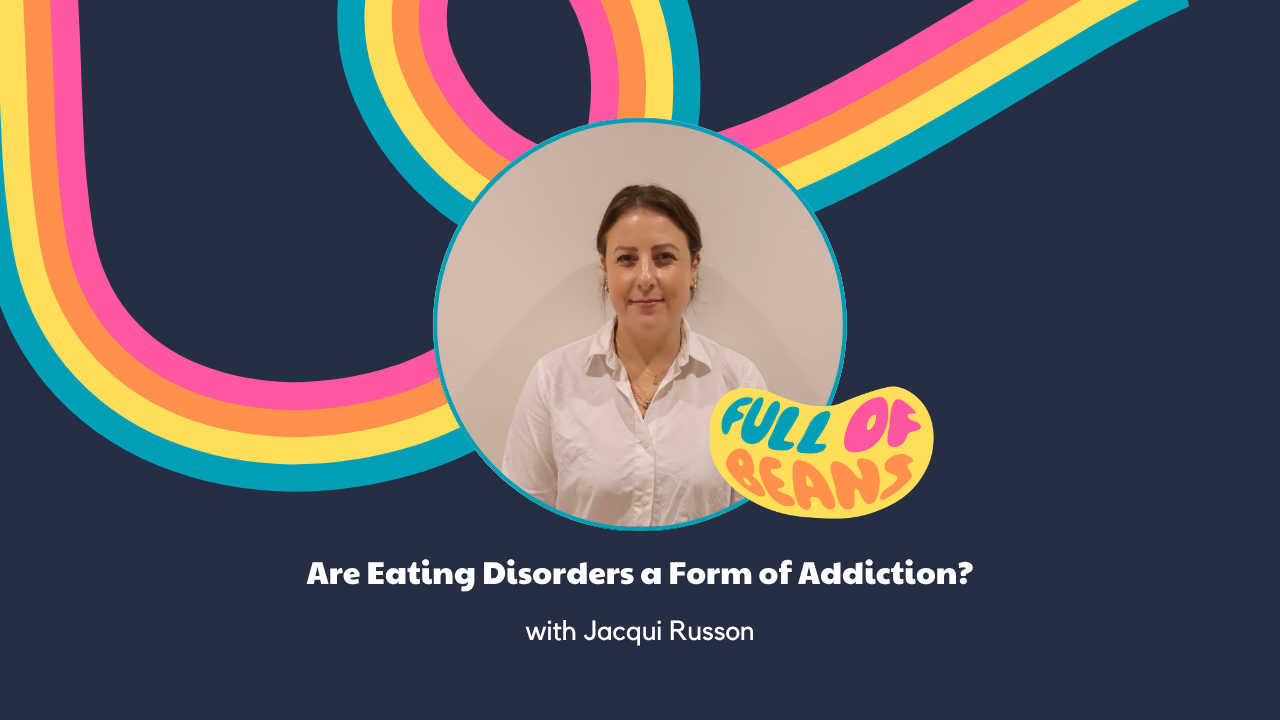
In this blog, I’m sharing some of the key insights from my recent conversation with Jacqui Russon, an occupational therapist and DBT therapist, where we explored the similarities, differences, and what this actually means for recovery.
The Overlap Between Eating Disorders and Addiction
When we think about addiction, we often think about substances: alcohol, drugs, and smoking.
But when you start to look a little closer, many of the patterns seen in addiction also show up in eating disorders.
Things like:
- Intrusive, obsessive thoughts
- Rigid routines and behaviours
- A sense of compulsion rather than choice
- Life becoming structured around the behaviour
- Using the behaviour to cope with emotional distress
For someone with an eating disorder, their day might revolve around food, exercise, or body checking.
For someone with an addiction, it might revolve around accessing or using a substance. They are different behaviours, but often a similar underlying experience.
“Why Can’t You Just Stop?”
This is something that comes up in both eating disorders and addiction. There’s often an assumption that if someone knows what they’re doing is harmful… they should be able to stop.
But from my own experience, that’s not how it feels from the inside. I didn't feel a sense of choice, or even space to consider an alternative. Because it's not that someone lacks willpower, it's because the behaviour has become a way of surviving.
Understanding the Function of the Behaviour
One of the most helpful shifts in both eating disorder and addiction recovery is moving away from:
“Why are you doing this?”
to
“What is this doing for you?”
Because these behaviours don’t appear out of nowhere.
They often serve a function, such as:
- Numbing overwhelming emotions
- Creating a sense of control
- Providing safety or predictability
- Avoiding painful experiences
- Managing anxiety or distress
And until we understand that function, it’s very hard to replace the behaviour with something more supportive.
Shame, Guilt, and Emotional Avoidance
Jacqui highlighted that another key overlap is the role of shame and guilt. Often, once someone begins to stabilise, whether through refeeding (in eating disorders) or detox (in addiction), there’s more space for emotions to surface. And that’s when things can feel even harder.
Because underneath the behaviours, there’s often:
- Unprocessed pain
- Trauma
- Resentment
- Anger
In fact, one of the most interesting parts of this conversation was around anger, because anger is often something people struggle to access or express, yet it can be a really important part of recovery.
Not as something destructive, but as something that helps people:
- Set boundaries
- Find their voice
- Reconnect with themselves
A Key Difference: You Can’t Abstain From Food
One of the biggest differences between eating disorders and addiction is the role of abstinence. In addiction recovery, many models focus on complete abstinence from a substance. But with eating disorders, that’s not possible... You can’t avoid food. You have to engage with it — multiple times a day.
Which means recovery often involves:
- Gradual exposure
- Building flexibility over time
- Learning to tolerate discomfort
- Developing trust around food and the body
In many ways, this can make eating disorder recovery feel incredibly confronting, because you’re repeatedly facing the very thing that feels unsafe.
Recovery Is About More Than “Stopping”
Whether we’re talking about eating disorders or addiction, recovery isn’t just about stopping a behaviour. It’s about building a life that feels:
- Safe
- Meaningful
- Manageable
This is where approaches like Dialectical Behaviour Therapy (DBT) and Occupational Therapy can be really helpful, because they focus on:
- Developing coping skills
- Improving emotional regulation
- Building structure and routine
- Re-engaging with everyday life
- Not just surviving, but actually living.
So… Are Eating Disorders an Addiction?
The answer isn’t simple. Eating disorders are not classified as addictions in diagnostic manuals. But there are undeniable similarities in how they show up, function and are experienced.
Perhaps the more helpful question is: What can we learn from understanding the overlap?
Because when we move away from blame and towards understanding, we create more space for compassion, and more opportunity for meaningful, sustainable recovery.
Listen to the Full Episode
🎧 You can listen to the full conversation with Jacqui Russon on the
Full of Beans podcast.
Recent Posts