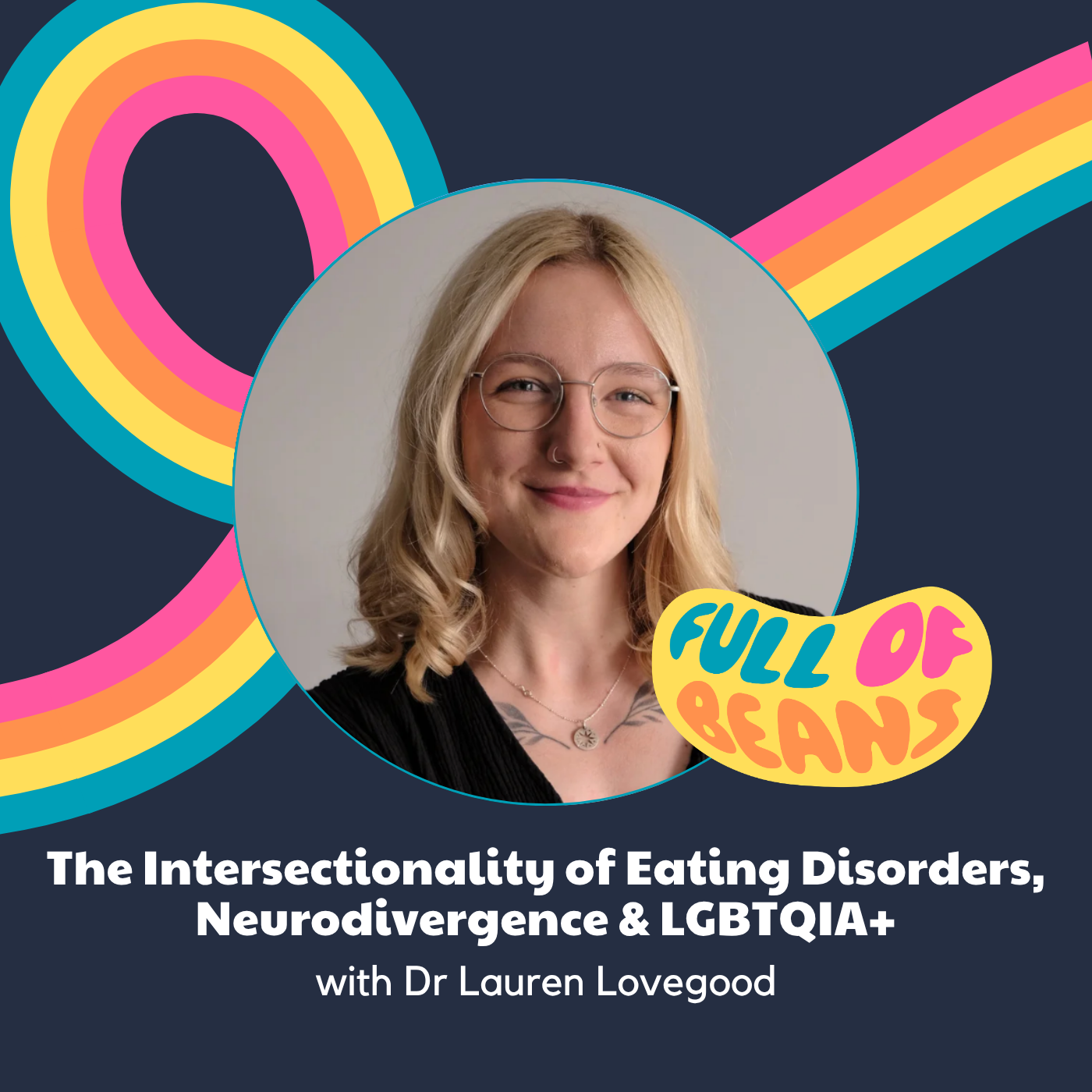
The Intersectionality of Eating Disorders, Neurodivergence & LGBTQIA+ with Dr Lauren Lovegood
The Hidden Intersection: Why Identity, Neurodiversity, and Eating Disorders Often Collide
Have you ever felt like you were trying to play a game where everyone else had the rulebook, but yours was written in a different language?
In our latest episode of the Full of Beans Podcast, I sat down with Dr. Lauren Lovegood, a psychologist who specialises in the complex "overlap" between Eating Disorders, Neurodiversity (ADHD & Autism), and the LGBTQIA+ community.
For a long time, the world viewed eating disorders through a very narrow lens. But as Lauren and I discussed, recovery isn't just about food, it’s about identity, sensory safety, and how our unique brains navigate a world that wasn't always built for us.
The "Internal Sense of Difference"
One of the most profound things Lauren shared was the "internal sense of difference" that many neurodivergent and LGBTQIA+ folks feel from a very young age. When you feel like you don’t fit the "standard" mould, an eating disorder can sneak in as a way to:
- Find Control: When the world feels overwhelming or confusing.
- Masking: Attempting to "blend in" or meet societal expectations of how a body "should" look.
- Dopamine Seeking: For my fellow ADHDers, food (or the restriction of it) can become a powerful tool for managing brain chemistry.
Gender Affirmation vs. The "Slippery Slope"
We had a really honest conversation about the LGBTQIA+ community, specifically regarding trans and non-binary identities. Lauren noted that while many of us practice "gender-affirming care" daily (like makeup or grooming), it can become a slippery slope when weight loss is used to achieve a more "masculine" or "feminine" silhouette.
The hardest part? The glorification. Often, when someone in the queer community loses weight to align with their identity, they are met with praise and compliments. This can make the disordered behaviours feel "valid" or even "necessary," making it that much harder to choose recovery.
The Sensory World: It’s Not Always About Body Image
Did you know that some eating struggles, like ARFID (Avoidant/Restrictive Food Intake Disorder), have nothing to do with how we look in the mirror?
For many autistic or ADHD individuals, food is a sensory minefield. We talked about:
- The "Beige Food" Safety Net: Why nuggets and toast are consistent and safe, while a ripening banana is an unpredictable sensory nightmare! 🍌
- Executive Function: Why moving to university or living alone can cause our eating habits to fall apart, because our brains struggle with the "planning and doing" of a meal.
Finding Your "Good Enough" Recovery
Lauren’s message is one of so much hope: Recovery doesn't have to be perfect.
Whether it’s learning to live alongside your neurodiversity or finding a sense of belonging in the LGBTQIA+ community that doesn't depend on your dress size, the goal is autonomy. You deserve to live a life where your identity is celebrated, not restricted.
If you want to hear more about Dr. Lauren’s journey and our deep dive into these intersections, head over to the Full of Beans Podcast on Spotify, Apple, or YouTube!
Sending you so much love and positive beans,
Han 💛
Recent Posts