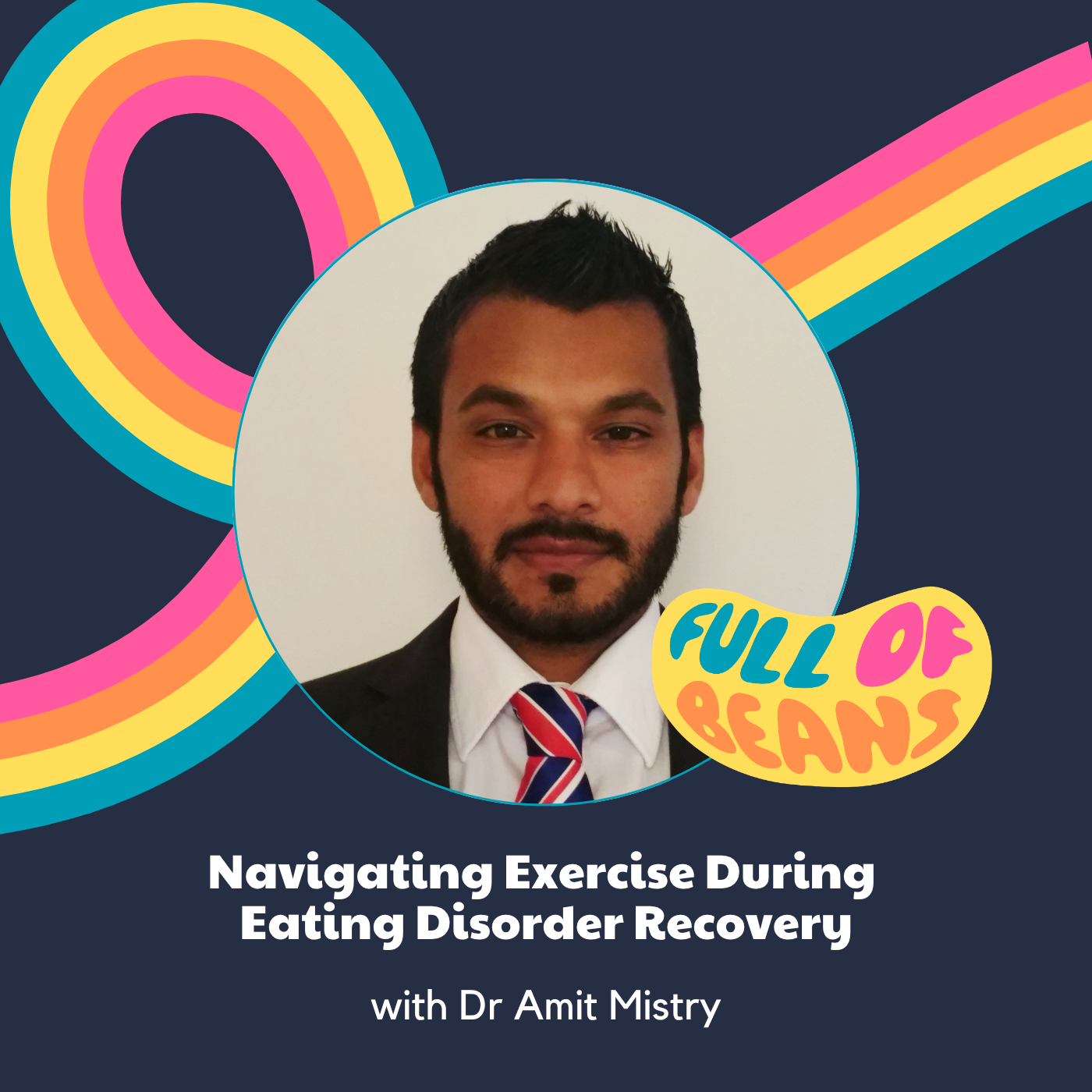
Navigating Exercise During Eating Disorder Recovery with Dr Amit Mistry
Exercise Addiction in Eating Disorder Recovery:
When "Healthy" Movement Becomes Maladaptive
For many of us in recovery, the relationship with movement is one of the hardest pieces of the puzzle to solve. We’re told that exercise is the "golden ticket" for mental health, but when you’re navigating an eating disorder, that line between health and compulsion isn't just thin, it’s often invisible.
In this week’s episode of Full of Beans, I sat down with Dr. Amit Mistry, a Consultant Sports Psychiatrist at the Nightingale Hospital. We explored the complex intersection of sports psychiatry and eating disorders, specifically looking at how "healthy" movement can morph into a systemic addiction.
Is Exercise an Addiction? Understanding the Spectrum
While "exercise addiction" isn't yet a formal diagnosis in the DSM-5, clinicians like Dr. Mistry view it as a spectrum. On one end, you have recreational movement that boosts endorphins and social connection. On the other, you have a systemic issue that mirrors drug use: tolerance, withdrawal, and a total loss of autonomy.
The Warning Signs of Problematic Exercise
Unlike a localised injury (like a runner’s knee), exercise addiction is systemic. Dr Mistry highlights several key indicators that movement has moved from "functional" to "maladaptive":
- Impact on Social Function: Does your day revolve entirely around the workout? Do you skip social events or family time to ensure you hit a specific metric?
- Physical Red Flags: Chronic fatigue, compromised immune function (getting sick more often), and, in many cases, impacts on fertility and bone density.
- The Guilt Factor: Feeling intense shame, anxiety, or irritability if you are unable to exercise for even one day.
The Myth of the "Elite" Athlete
One of the most dangerous things we see on social media is the "performance narrative" being pushed onto the general public. Dr. Mistry notes that elite athletes represent only 0.0025% of the population.
These individuals have teams of dietitians and coaches ensuring they rest and refuel. When "weekend warriors" try to mimic these high-intensity regimes without that support structure, it often leads to RED-S (Relative Energy Deficiency in Sport), a state where your body doesn't have enough energy to support both your movement and your basic physiological functions.
Moving Beyond "Diagnostic Switching"
Recovery can be a deceptive journey. Sometimes, as we move away from restrictive eating, the disorder simply "switches disguises" into Orthorexia or exercise compulsion.
You might be high-functioning, holding down a job and appearing "healthy", but if your mind is still governed by rigid rules and the need for "perfection," the disorder is still in the driver's seat.
How to Rebuild a Relationship with Movement
If you feel trapped in a cycle of over-exercising, Dr. Mistry suggests shifting the focus from a performance narrative to a purpose narrative.
1. Identify the Function
Ask yourself: What is this exercise serving? Is it for joy and connection, or is it a way to avoid difficult emotions? If it’s an emotional coping mechanism, it’s time to explore alternative strategies through therapies like CBT (Cognitive Behavioural Therapy) or DBT (Dialectical Behavioural Therapy).
2. Graded Exposure
In an inpatient setting, clinicians use a model of graded exposure. This means reintroducing movement slowly, starting with social, low-impact activities like yoga or swimming, while prioritising physical stability and weight restoration.
3. Challenge the Rigidity
Recovery often happens in "baby steps." It’s about proving to yourself that reducing a workout by just one minute, or choosing a rest day, won't result in the catastrophic consequences your mind predicts.
The Goal: Autonomy, Not Abstinence
Ultimately, the goal of sports psychiatry in eating disorder recovery isn't to stop you from ever moving again. It’s about giving you back your autonomy. It’s about reaching a place where you choose to move because you want to, but you’re equally capable of choosing to rest because your body needs it.
Listen to the full episode with Dr. Amit Mistry on the Full of Beans Podcast.
Thank you to our sponsor, @nightingalehospital, for supporting this conversation.
Recent Posts