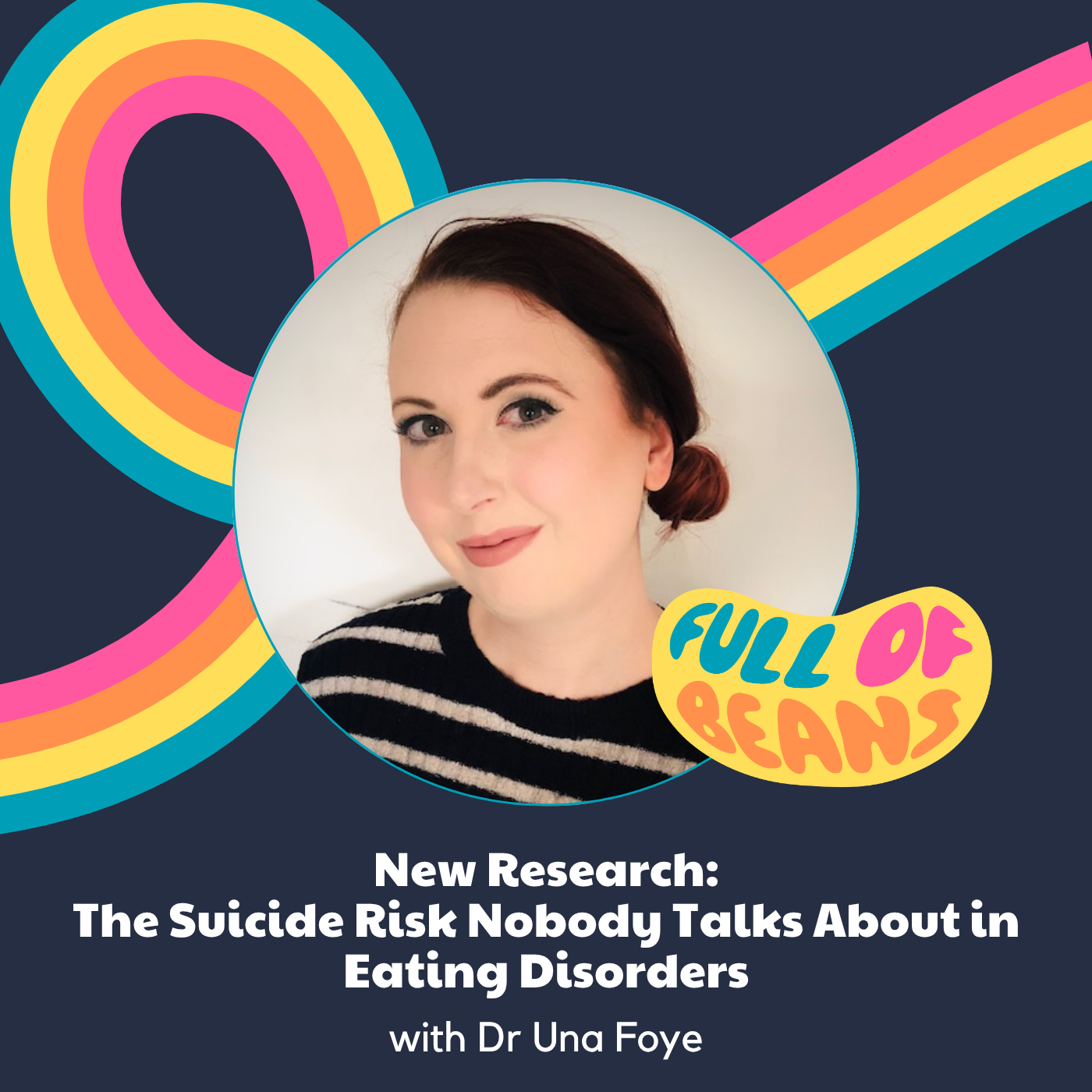
New Research: The Suicide Risk Nobody Talks About in Eating Disorders
People with Eating Disorders Are at Higher Suicide Risk Yet Research Has Never Been Done Before
The research that's never been done before, until now
If you ask most people in the eating disorder field, "Are eating disorders and suicide linked?", they would probably say yes.
But here's the thing: we've never had the research or data to truly reflect it.
Part of the reason is something that doesn't really exist for other conditions. When someone with an eating disorder dies by suicide or an eating disorder, the cause of death is often recorded as something else: a heart complication, an organ failure, a medical issue. The eating disorder and the suicide often don't make it onto the record.
But even more than that, if someone with an eating disorder is struggling with suicidal ideation or self-harm, they're often told by services they can't have eating disorder treatment whilst experiencing those thoughts or behaviours. Adding on top of that is a layer of fear from clinicians - if I ask the question and they say yes... what am I supposed to do?
These experiences, as well as other confounding factors, are the reason we have no research to truly understand the intersection of suicide and eating disorders, because until now, nobody had actually sat down with people who have lived experience of both an eating disorder and suicidality and asked them: what is going on?
That's exactly what Una and her team set out to change.
Why Hasn't This Research Been Done Before?
There are a few reasons, but stigma is a big one. Only in 1961 was suicide decriminalised in the UK. Harmful language is still used, such as the word "commit" when describing suicide (FYI - better terminology would be "died by suicide". Despite our shift in understanding and awareness, suicide is a terrifying concept. For anyone. And so when it comes to recording deaths, structuring services, and how willing people are to talk about it at all, there is still a lot of silence.
But before we go on, let's make one thing clear: talking about suicide doesn't cause suicide. Not talking about suicide can.
There's also the way mental and physical health are still treated as separate things. Eating disorders sit in a strange middle ground between mental and physical health, and when someone dies, that complexity often gets flattened into a medical diagnosis that's easier to record.
Una's research is trying to change all of that.
What Did the Research Find?
If we conclude one thing from this research, it's that this is really complex. But simply because something is complex doesn't mean we need to ignore it. In fact, it means it requires more of our attention to support. Within the complexity of this topic, some really important things emerged.
1. The eating disorder itself increases risk
Living with an eating disorder is hard. The isolation, the lost years, and the identity that gets swallowed up can increase the risk of suicidal thoughts.
From spending their formative years in inpatient settings, being unable to go out and socialise because of fears around food, to watching others do exciting things like go to uni, get a job, have a baby, make new friends, explore relationships, all of these things are made impossible with an eating disorder. No matter whether someone is 18 or 81, eating disorders increase isolation and loneliness, and the loss of purpose and identity is a real risk factor.
2. Recovery can be one of the most vulnerable periods
Some may be surprised by this, but to me it makes total sense.
Rightly or wrongly, an eating disorder serves a function. It's a coping mechanism for when life feels too hard or out of control. It gives you a sense of purpose, identity, and makes you feel like you're finally good at something. And when you start to give it up, that can feel terrifying.
Recovery also means losing something that was helping you manage. And if the support around you starts to fall away once you've hit a certain weight, if the message from loved ones is "you're better now", but your head still needs help, that gap can be incredibly dangerous.
3. Intersectionality matters
Who you are shapes your experience of risk.
It might be that you are male and feel invisible in the eating disorder spaces, come from a minoritised ethnic background where eating disorders are misunderstood, live in a larger body and don't align with eating disorder stereotypes or have spent your life being neurodivergent and never feel like you quite fit in.
All of these things can compound the risk, not because of who those people are, but because of how the world responds to them.
4. Silence makes everything worse
If we're not talking about it, we're silencing it. And silence increases loneliness, and loneliness increases risk. This came up again and again, within people themselves, within families, and within services. Some people in Una's interviews said it was the first time they had ever talked about their suicidal thoughts, showing just how much we need to open this conversation up - not to normalise suicide, but to know that it is safe to talk about it and get help if you're experiencing it.
5. Services are too siloed
There's a painful irony in services that treat an eating disorder in one room and suicidality in another, as if the two aren't deeply intertwined. Some people were told they couldn't be treated for their eating disorder if they were also self-harming. Some were discharged because they were seen as too complex.
What's needed instead is care that sees the whole person. That holds both things at once.
Why Asking the Question Matters
We know that asking someone, "Are you feeling suicidal?" is frightening. But not asking is more dangerous. Mentioning suicide is not going to make someone attempt it. But staying silent might mean they never feel safe enough to reach out.
For clinicians, that means holding your own fear and asking anyway. For families, it might mean as little as sitting with someone and having a conversation, or knowing that the Hub of Hope exists and what number to call.
It doesn't have to be dramatic (in fact, making it as calm as possible is very key here), it just has to happen.
There Is Hope
I want to be clear about something: this research is not saying that everyone with an eating disorder will experience suicidality. It's saying that enough people do that we can no longer afford to stay silent about it.
And within all of that complexity and difficulty, there is real hope. All 30 people who shared their story for this research are still here. They came forward because they wanted things to be different for other people. What kept some of them going wasn't a perfect care pathway or a grand intervention. It was small things, a meeting next week, their dog that needed walking, or a postman that needed greeting.
Sometimes a tiny thread is enough, and part of what this research aims to do is ensure more people can find theirs.
Find Out More
- Listen to the full episode with Una Foye on your favourite podcast platform or watch on YouTube
- Search Una Foye or Dr Moritz Herle to find their King's College London web pages
If you are struggling with thoughts of suicide or self-harm, the Hub of Hope can help you find support services in your area. In a crisis, please get in touch with your local emergency services or reach out to a crisis line.
Recent Posts