How Hypnotherapy Can Support Disordered Eating Recovery
“Most people know what they don’t want. Part of the work is helping them discover what they want to feel instead.”
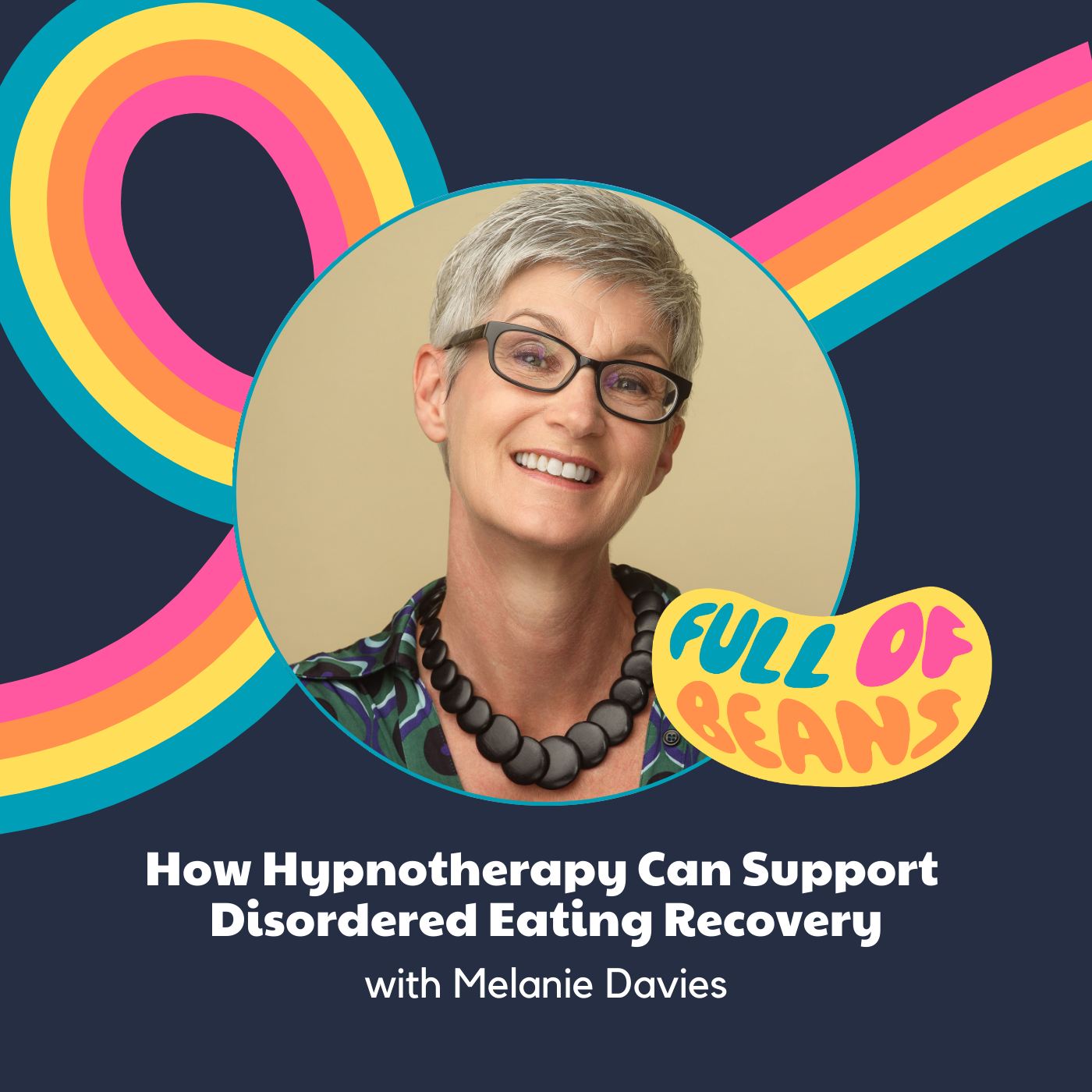
In this week’s episode of Full of Beans, Hannah is joined by Melanie Davies, a sleep and stress consultant and clinical hypnotherapist, to explore how hypnotherapy can support anxiety regulation, emotional overwhelm, and disordered eating patterns.
Together, Hannah and Melanie unpack what hypnotherapy actually involves, how it works with the emotional and unconscious mind, and why nervous-system-based approaches may help when behaviour-focused treatments feel limiting or incomplete.
This week, we discuss:
- What clinical hypnotherapy is and how it differs from stage hypnosis
- Hypnosis as a naturally occurring state of focused attention
- The role of the unconscious mind in habits, urges, and emotional eating
- Anxiety, stress responses, and food-related coping behaviours
- Emotional regulation as a foundation for sustainable habit change
- Hypnotherapy as a complementary approach alongside existing treatment
- Using imagination to support neural rewiring and behaviour change
- Anchoring techniques to support self-soothing and nervous system calming
- Evidence and emerging research in hypnotherapy, disordered eating, and IBS
- Ethical practice, contraindications, and the importance of assessment
Timestamps
- 00:00 – Meeting Melanie and introducing hypnotherapy in clinical practice
- 02:10 – Why hypnosis isn’t “mind control” and what actually happens in session
- 05:40 – Focused attention, suggestibility, and everyday hypnotic states
- 09:10 – Emotional drivers of binge urges, restriction, and food noise
- 13:30 – Individualised treatment and why one-size-fits-all approaches fall short
- 16:50 – Reconnecting with bodily cues, fullness, and interoceptive awareness
- 20:30 – Supporting long-term change: maintenance, self-hypnosis, and autonomy
- 24:10 – Calming cortisol, anchors, and nervous system retraining
- 27:50 – Clinical evidence: bulimia, impulsive eating, IBS and the gut-brain axis
- 33:20 – Integration with medical care, ethics, and suitability
- 36:00 – Accessing support and next steps
Resources & Links
- Visit Melanie’s website: MelanieDaviesMindSolutions.com
- Follow Melanie on Instagram, Facebook, and LinkedIn
Connect with Us:
- Listen to the Full of Beans Podcast
- Follow Full of Beans on Instagram
- Listen on YouTube
⚠️ Trigger Warning: Mentions of eating disorders, disordered eating behaviours, anxiety, and binge eating. Please take care when listening.
If you enjoyed this episode, don’t forget to subscribe, rate, and share the podcast to help us spread awareness.
Sending positive beans your way, Han 💛
Recent Posts